LINE Ads Scaling: Seven Tactics to Cut CPA with AI
LINE Ads Scaling: Seven Tactics to Cut CPA with AI

LINE Ads is a huge platform that is used by a large number of people monthly in Japan, and its reach is unmatched by others. Many companies expect great results from advertising on this platform, but it's not uncommon to see their advertising budget wasted without achieving the desired outcomes.
However, to fully leverage the potential of LINE Ads management, strategies and knowledge beyond mere ad placement are required.
Many may wonder, "Why isn't our company's campaign reducing CPA (Cost Per Acquisition)?" or "Why do we get clicks but not conversions?" These are common concerns.
This article explains seven surprising tips that many marketers often overlook, analyzed by professionals in ad management. By implementing these points, you should be able to dramatically improve your campaign's effectiveness and optimize your CPA.
--------------------------------------------------------------------------------
1. Paradoxical Targeting Setup: "Start Broad, Narrow it Down with Data" is the Key to Success
When starting with LINE Ads, a common initial trap many marketers fall into is overly narrowing the target audience. For example, it's common to define a persona too finely right from the start, such as "a single 22-year-old man living in Tokyo who is interested in dieting."
However, this is a critical mistake when maximizing the machine learning algorithm of LINE Ads. If the target is extremely narrow, the algorithm cannot gather sufficient learning data necessary for optimization, resulting in stagnated delivery volume and often leading to decreased CTR (Click Through Rate) and CVR (Conversion Rate).
Professional operators take the opposite approach.
The rule of thumb for targeting settings is to set broadly at first and then gradually narrow down based on performance data. If you narrow down the target too much at the initial stage, you limit the number of targets, preventing the system from gathering the data needed for machine learning.
Implementation Point: Start broad with basic segments such as age, gender, and region. Then carefully monitor the campaign performance report to identify particularly high-performing (low CPA, high CVR) age groups, genders, regions, and interest categories. Based on that data, you can create new ad groups focused on effective segments, allowing for fact-based optimization rather than assumptions.
2. Hack for Setting Goals: Intentionally Starting with "Traffic Objective" for Conversion Acquisition
Even if your ultimate goal is purchasing products or registering on the website (conversion), there is a sophisticated strategy to initially set the purpose as "website traffic."
This is particularly effective when working with new products that have no past conversion data or when there are few conversions and optimization isn't progressing.
The logic is that a campaign set for the "website conversion" objective can only efficiently identify and optimize for "users likely to convert" after a certain amount of conversion data has accumulated. If the data is zero, the algorithm does not know the basis for optimization and cannot function effectively.
That's where the "website traffic" objective comes into play. This purpose operates to maximize clicks rather than conversions, allowing for the accumulation of a large amount of traffic to the website at a relatively low cost. This can rapidly build an audience list of site visitors through the LINE Tag, while potentially generating some conversion data organically.
Specific Action Plan: If you are using a new product or service with no past data, spend the first 1-2 weeks running the campaign with a "website traffic" objective, dedicated to building a retargeting list of at least 1,000 users. Once you have built a sufficient audience list and conversions start being measured, launch a new campaign with the main "website conversion" objective based on that data. This two-step approach ultimately streamlines the path to optimization.
3. Optimizing Similar Audiences: Strategic Use of "1% Similarity" vs. "15%"
Similar audiences are a powerful function that LINE automatically finds based on the data of existing quality customers (e.g., past purchasers) that have similar behavioral traits to new users. However, the effectiveness can vary greatly based on the "similarity" setting.
The setup method has both "automatic" and "manual" options, but if you aim for a more strategic operation, understanding the "manual" setting is essential. With manual settings, you can specify similarity from 1% to 15%.
1% Similarity: This group has the highest similarity to the source audience. Conversion likelihood is very high, but the potential reach is small. It is highly effective during the harvesting phase that prioritizes CPA and CVR.
15% Similarity: This group has the broadest reach, but the similarity to the source audience decreases. The conversion likelihood may decrease, but it is effective for awareness expansion and large-scale new customer acquisition.
For beginners, it's standard to start with a low similarity setting (e.g., 1-3%) in manual mode, beginning with the most likely user groups.
Pro Tip: Continuing campaigns with a narrow audience like a 1% similarity group can lead to the same users seeing ads repeatedly, increasing frequency and leading to diminishing returns. If the performance report indicates rising frequency accompanied by a decline in CTR—a sign of ad fatigue—consider slightly expanding the similarity (for instance, changing it from 1% to 5%) to reach new user groups and extend the lifespan of the campaign.
4. Redefining "Friend Addition Ads": Building Low-Cost Future Prospect Lists
The "Friend Addition" campaigns of LINE Ads operate on a CPF (Cost Per Friend) payment model, where costs are incurred each time a friend is added. To merely view this as a tactic for increasing the number of followers for the LINE official account is a significant missed opportunity.
From a strategic viewpoint, this is a very efficient lead generation approach for "building a future prospect list at low cost."
Visitors to the website, once they leave, require additional advertising costs for retargeting ads to contact again. However, once users become "friends," you can directly deliver messages to them without further advertising costs. This is akin to building a warm lead list that becomes your company's "asset."
Implementation Point: Position friend addition ads as an "investment." Continuously deliver valuable information, exclusive offers, and content through the LINE official account to friends acquired through CPF campaigns. By taking the time to build relationships and nurturing, you will be able to convert them into high LTV (Customer Lifetime Value) quality customers in the future.
5. Preventing Fatal Measurement Misses: Technical Pitfalls of "LINE Tag" Installation
The automated bidding and optimization of LINE Ads all rely on accurate data measurement. The core of this is the "LINE Tag," but there are often overlooked technical pitfalls associated with its installation that can lead to fatal measurement misses.
Two major points to pay particular attention to are:
Adhering to Installation Order: Ensure that you first install the base code on all pages of your site (inside the
<head>tag), followed only thereafter by placing the conversion code at the achievement points such as purchase completion pages or registration completion pages. Mistakes in this order can prevent the tag from functioning correctly.Restrictions on Cross-Domain Measurement: This is the biggest point of caution. If the domain of the landing page of the advertisement (e.g.,
my-shop.com) is different from the conversion page (e.g., an external payment serviceshopify.com), tracking via first-party cookies will be interrupted, and conversions may not be measured.
This measurement failure does not merely result in skewed report numbers. It also means that no conversion data is sent to the system, preventing the automated bidding algorithm from learning, and optimization thus becomes completely stalled. As a result, ROAS (Return on Ad Spend) can significantly worsen.
Specific Action Plan: Before launching ads, be sure to review every part of your conversion process (funnel). If any points cross domains, consider unifying domains or implementing server-side tracking (such as conversion APIs) to ensure seamless measurement.
6. Eliminating Mismatches Between Creative and Delivery Surface
No matter how excellent the creative is, if it does not align with the context of where it's displayed (delivery surface), it won't resonate with the users. LINE Ads has diverse delivery surfaces, and the user's purpose and psychological state vary greatly across these.
Delivery Surface | User Situation and Content Characteristics | Optimal Creative Direction |
LINE VOOM | Entertainment or time-killing purposes. Vertical short videos are mainstream. | Content that entertains or surprises. |
LINE NEWS | Information gathering purpose. Centered around article content. | Article-like creatives or valuable still images and texts for information. |
Talk List | Communicating is the main purpose. The most active place. | Concise, visually clear, and unobtrusive information. Announcements of new products or sales. |
For instance, if an entertaining video flows in the feed of LINE VOOM, delivering a serious news article-like image ad would make users feel uncomfortable and scroll past. This mismatch significantly reduces ad effectiveness.
Implementation Point: When designing ad campaigns, prepare multiple variations of creative. Especially by preparing still images or videos with different aspect ratios, such as 1:1 (Square) or 16:9 (Card), ads can be displayed optimized for various delivery surfaces, preventing opportunity loss. After distribution, analyze performance reports by delivery surface to understand which creatives yielded the best results, and incorporate that into your next production.
7. Unexpected Waiting Time: Including "Ad Account Review (3-5 Business Days)" in Planning
If you think, "Once I create an account, I can start advertising right away," be careful. In LINE Ads, there is a mandatory review process by LINE after applying for ad account creation.
This review usually takes 3 to 5 business days.
This waiting time is a point many marketers overlook, and it can greatly affect the campaign schedule. For example, if you want to launch ads to coincide with a specific sale or event start date, if you don't take this review period into account, you might run into problems getting things going in time.
Specific Action Plan: Calculate backwards from the intended start date for the ad campaign and complete the ad account creation application at least two weeks in advance. This accounts for the 3-5 business day review period and, in the event of a rejection, provides enough buffer time for correcting information and resubmitting. Prior planning is the key to a smooth campaign launch.
--------------------------------------------------------------------------------
Conclusion
The seven tips presented here are not superficial operational methods of LINE Ads but rather ways of thinking that deeply understand the system behind them, especially the characteristics of machine learning. Rather than randomly placing ads, perspectives like "providing the algorithm with high-quality data" and "delivering optimal messages in the context of the user" are the keys to success.
The management of LINE Ads hinges on how wisely you can nurture the powerful partner that is machine learning.
AI-powered platforms like Cascade support complex optimizations as explained in this article. If you are interested, please consider implementing Cascade.
LINE Ads is a huge platform that is used by a large number of people monthly in Japan, and its reach is unmatched by others. Many companies expect great results from advertising on this platform, but it's not uncommon to see their advertising budget wasted without achieving the desired outcomes.
However, to fully leverage the potential of LINE Ads management, strategies and knowledge beyond mere ad placement are required.
Many may wonder, "Why isn't our company's campaign reducing CPA (Cost Per Acquisition)?" or "Why do we get clicks but not conversions?" These are common concerns.
This article explains seven surprising tips that many marketers often overlook, analyzed by professionals in ad management. By implementing these points, you should be able to dramatically improve your campaign's effectiveness and optimize your CPA.
--------------------------------------------------------------------------------
1. Paradoxical Targeting Setup: "Start Broad, Narrow it Down with Data" is the Key to Success
When starting with LINE Ads, a common initial trap many marketers fall into is overly narrowing the target audience. For example, it's common to define a persona too finely right from the start, such as "a single 22-year-old man living in Tokyo who is interested in dieting."
However, this is a critical mistake when maximizing the machine learning algorithm of LINE Ads. If the target is extremely narrow, the algorithm cannot gather sufficient learning data necessary for optimization, resulting in stagnated delivery volume and often leading to decreased CTR (Click Through Rate) and CVR (Conversion Rate).
Professional operators take the opposite approach.
The rule of thumb for targeting settings is to set broadly at first and then gradually narrow down based on performance data. If you narrow down the target too much at the initial stage, you limit the number of targets, preventing the system from gathering the data needed for machine learning.
Implementation Point: Start broad with basic segments such as age, gender, and region. Then carefully monitor the campaign performance report to identify particularly high-performing (low CPA, high CVR) age groups, genders, regions, and interest categories. Based on that data, you can create new ad groups focused on effective segments, allowing for fact-based optimization rather than assumptions.
2. Hack for Setting Goals: Intentionally Starting with "Traffic Objective" for Conversion Acquisition
Even if your ultimate goal is purchasing products or registering on the website (conversion), there is a sophisticated strategy to initially set the purpose as "website traffic."
This is particularly effective when working with new products that have no past conversion data or when there are few conversions and optimization isn't progressing.
The logic is that a campaign set for the "website conversion" objective can only efficiently identify and optimize for "users likely to convert" after a certain amount of conversion data has accumulated. If the data is zero, the algorithm does not know the basis for optimization and cannot function effectively.
That's where the "website traffic" objective comes into play. This purpose operates to maximize clicks rather than conversions, allowing for the accumulation of a large amount of traffic to the website at a relatively low cost. This can rapidly build an audience list of site visitors through the LINE Tag, while potentially generating some conversion data organically.
Specific Action Plan: If you are using a new product or service with no past data, spend the first 1-2 weeks running the campaign with a "website traffic" objective, dedicated to building a retargeting list of at least 1,000 users. Once you have built a sufficient audience list and conversions start being measured, launch a new campaign with the main "website conversion" objective based on that data. This two-step approach ultimately streamlines the path to optimization.
3. Optimizing Similar Audiences: Strategic Use of "1% Similarity" vs. "15%"
Similar audiences are a powerful function that LINE automatically finds based on the data of existing quality customers (e.g., past purchasers) that have similar behavioral traits to new users. However, the effectiveness can vary greatly based on the "similarity" setting.
The setup method has both "automatic" and "manual" options, but if you aim for a more strategic operation, understanding the "manual" setting is essential. With manual settings, you can specify similarity from 1% to 15%.
1% Similarity: This group has the highest similarity to the source audience. Conversion likelihood is very high, but the potential reach is small. It is highly effective during the harvesting phase that prioritizes CPA and CVR.
15% Similarity: This group has the broadest reach, but the similarity to the source audience decreases. The conversion likelihood may decrease, but it is effective for awareness expansion and large-scale new customer acquisition.
For beginners, it's standard to start with a low similarity setting (e.g., 1-3%) in manual mode, beginning with the most likely user groups.
Pro Tip: Continuing campaigns with a narrow audience like a 1% similarity group can lead to the same users seeing ads repeatedly, increasing frequency and leading to diminishing returns. If the performance report indicates rising frequency accompanied by a decline in CTR—a sign of ad fatigue—consider slightly expanding the similarity (for instance, changing it from 1% to 5%) to reach new user groups and extend the lifespan of the campaign.
4. Redefining "Friend Addition Ads": Building Low-Cost Future Prospect Lists
The "Friend Addition" campaigns of LINE Ads operate on a CPF (Cost Per Friend) payment model, where costs are incurred each time a friend is added. To merely view this as a tactic for increasing the number of followers for the LINE official account is a significant missed opportunity.
From a strategic viewpoint, this is a very efficient lead generation approach for "building a future prospect list at low cost."
Visitors to the website, once they leave, require additional advertising costs for retargeting ads to contact again. However, once users become "friends," you can directly deliver messages to them without further advertising costs. This is akin to building a warm lead list that becomes your company's "asset."
Implementation Point: Position friend addition ads as an "investment." Continuously deliver valuable information, exclusive offers, and content through the LINE official account to friends acquired through CPF campaigns. By taking the time to build relationships and nurturing, you will be able to convert them into high LTV (Customer Lifetime Value) quality customers in the future.
5. Preventing Fatal Measurement Misses: Technical Pitfalls of "LINE Tag" Installation
The automated bidding and optimization of LINE Ads all rely on accurate data measurement. The core of this is the "LINE Tag," but there are often overlooked technical pitfalls associated with its installation that can lead to fatal measurement misses.
Two major points to pay particular attention to are:
Adhering to Installation Order: Ensure that you first install the base code on all pages of your site (inside the
<head>tag), followed only thereafter by placing the conversion code at the achievement points such as purchase completion pages or registration completion pages. Mistakes in this order can prevent the tag from functioning correctly.Restrictions on Cross-Domain Measurement: This is the biggest point of caution. If the domain of the landing page of the advertisement (e.g.,
my-shop.com) is different from the conversion page (e.g., an external payment serviceshopify.com), tracking via first-party cookies will be interrupted, and conversions may not be measured.
This measurement failure does not merely result in skewed report numbers. It also means that no conversion data is sent to the system, preventing the automated bidding algorithm from learning, and optimization thus becomes completely stalled. As a result, ROAS (Return on Ad Spend) can significantly worsen.
Specific Action Plan: Before launching ads, be sure to review every part of your conversion process (funnel). If any points cross domains, consider unifying domains or implementing server-side tracking (such as conversion APIs) to ensure seamless measurement.
6. Eliminating Mismatches Between Creative and Delivery Surface
No matter how excellent the creative is, if it does not align with the context of where it's displayed (delivery surface), it won't resonate with the users. LINE Ads has diverse delivery surfaces, and the user's purpose and psychological state vary greatly across these.
Delivery Surface | User Situation and Content Characteristics | Optimal Creative Direction |
LINE VOOM | Entertainment or time-killing purposes. Vertical short videos are mainstream. | Content that entertains or surprises. |
LINE NEWS | Information gathering purpose. Centered around article content. | Article-like creatives or valuable still images and texts for information. |
Talk List | Communicating is the main purpose. The most active place. | Concise, visually clear, and unobtrusive information. Announcements of new products or sales. |
For instance, if an entertaining video flows in the feed of LINE VOOM, delivering a serious news article-like image ad would make users feel uncomfortable and scroll past. This mismatch significantly reduces ad effectiveness.
Implementation Point: When designing ad campaigns, prepare multiple variations of creative. Especially by preparing still images or videos with different aspect ratios, such as 1:1 (Square) or 16:9 (Card), ads can be displayed optimized for various delivery surfaces, preventing opportunity loss. After distribution, analyze performance reports by delivery surface to understand which creatives yielded the best results, and incorporate that into your next production.
7. Unexpected Waiting Time: Including "Ad Account Review (3-5 Business Days)" in Planning
If you think, "Once I create an account, I can start advertising right away," be careful. In LINE Ads, there is a mandatory review process by LINE after applying for ad account creation.
This review usually takes 3 to 5 business days.
This waiting time is a point many marketers overlook, and it can greatly affect the campaign schedule. For example, if you want to launch ads to coincide with a specific sale or event start date, if you don't take this review period into account, you might run into problems getting things going in time.
Specific Action Plan: Calculate backwards from the intended start date for the ad campaign and complete the ad account creation application at least two weeks in advance. This accounts for the 3-5 business day review period and, in the event of a rejection, provides enough buffer time for correcting information and resubmitting. Prior planning is the key to a smooth campaign launch.
--------------------------------------------------------------------------------
Conclusion
The seven tips presented here are not superficial operational methods of LINE Ads but rather ways of thinking that deeply understand the system behind them, especially the characteristics of machine learning. Rather than randomly placing ads, perspectives like "providing the algorithm with high-quality data" and "delivering optimal messages in the context of the user" are the keys to success.
The management of LINE Ads hinges on how wisely you can nurture the powerful partner that is machine learning.
AI-powered platforms like Cascade support complex optimizations as explained in this article. If you are interested, please consider implementing Cascade.
\FreeDownload Now/
\FreeDownload Now/
\FreeDownload Now/
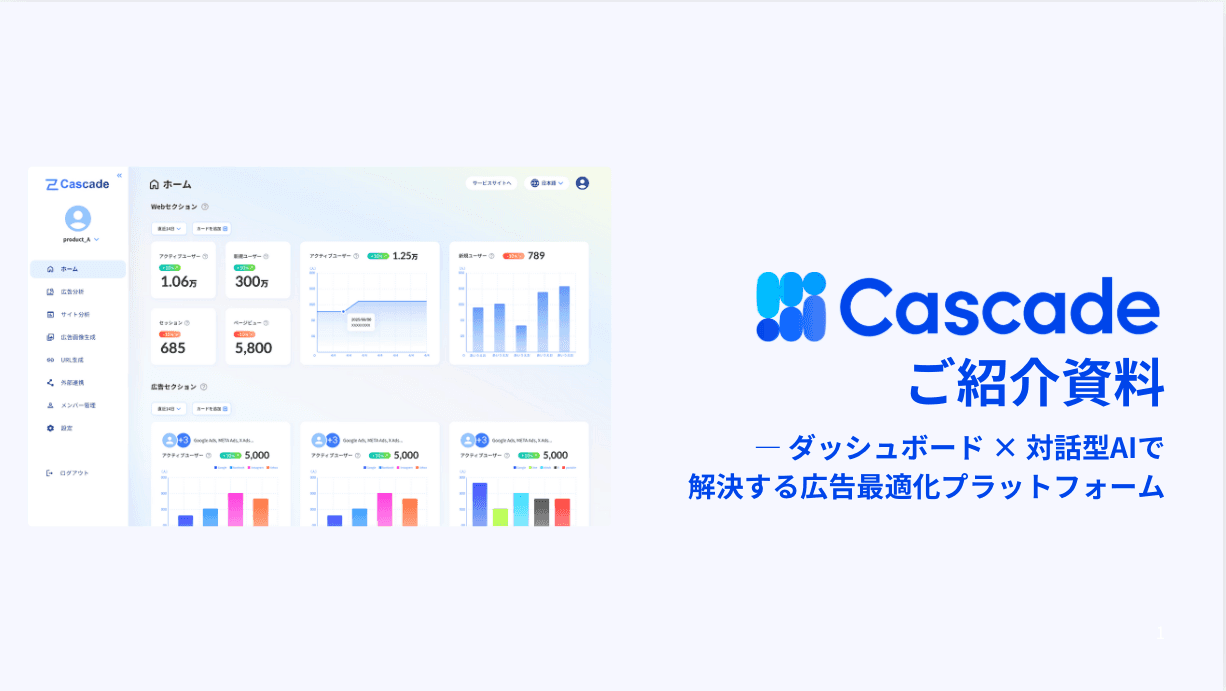
Table of Contents

© 2025 Cascade Inc, All Rights Reserved.

© 2025 Cascade Inc, All Rights Reserved.
© 2025 Cascade Inc, All Rights Reserved.