What Does CPM Mean? 10 Definitions Across Marketing, Project Management, Finance, Real Estate, and More

What Does CPM Mean? 10 Definitions Across Marketing, Project Management, Finance, Real Estate, and More

Feb 22, 2026

New Common Sense: CPC vs CPM Revenue Changes

Have you ever encountered the term "CPM" in business conversations or industry reports and found yourself losing track of the context? The CPM that marketers talk about and the CPM that project managers discuss might refer to completely different concepts. This three-letter abbreviation is used in surprisingly many fields, each carrying its own significant meaning. What exactly is CPM?

In this article, we will carefully unravel the 10 meanings of "CPM" used in various contexts, from marketing to project management, business strategy, real estate, Indian politics, and even typing speed measurement, to clarify the confusion.

1. Marketing CPM: Cost Per Mille

The most commonly used CPM in the world of digital advertising stands for "Cost Per Mille." Here, "Mille" means "1,000" in Latin, and CPM refers to a pricing model that indicates the cost for every 1,000 times an advertisement is displayed (impressions).

The main difference from the CPC (Cost Per Click) model is the timing of the charge. In CPC, costs occur only when a user actually clicks on the advertisement, whereas in CPM, costs occur simply when the ad is displayed. Therefore, CPM is suitable for campaigns aimed primarily at increasing brand awareness, broad reach of messages, and improving engagement rather than pursuing clicks or direct conversions (such as sales or registrations).

On the other hand, for publishers and operators of high-traffic websites, CPM becomes a stable revenue model. It allows predictable revenue based on the number of visitors to the site, unaffected by fluctuations in click rates.

2. Project Management CPM: Critical Path Method

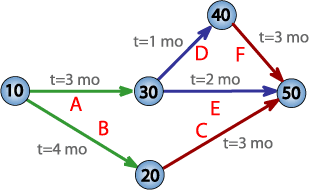
In project management, CPM refers to the "Critical Path Method" or "Critical Path Analysis (CPA)." This is an essential technique for planning complex projects and ensuring they are completed on schedule.
クリティカルパス

CPM identifies all the tasks that make up the project and maps their dependencies to calculate the shortest time required to complete the entire project. By using this method, project managers can accurately determine which tasks directly correlate to delays in the overall project.

The main components of CPM are as follows:

  • Activities and dependencies: The individual tasks that make up the project and the logical order relationships that exist between those tasks. This refers to relationships such as "Task B cannot begin until Task A is completed."

  • Activity durations: The estimated time required to complete each task.

  • Critical path: The longest sequence of tasks that connects the project start to completion. Any delay in a task on this path leads to a delay in the overall project completion date.

  • Float: Also known as "slack," it is the allowable time that a specific task can be delayed without affecting the overall project schedule. The float of tasks on the critical path is zero.

By leveraging CPM, project managers can focus resources on the most critical tasks, identify potential bottlenecks in advance, and effectively mitigate risks. This allows project managers not only to track schedules but also to actively manage delay risks and identify where to deploy resources most effectively.

3. Business Strategy CPM: Corporate Performance Management

In the context of management and finance, CPM means "Corporate Performance Management." This refers to methodology, systems, and software that centrally manage the organization's strategic goal setting, execution, and monitoring to optimize performance.

CPM software integrates financial and operational data across the organization, providing decision-makers with a "Single Source of Truth" for accurately grasping the current state of the business. Typically, CPM platforms include features such as:

  • Budgeting

  • Forecasting

  • Financial consolidation

  • Reporting and analysis

CPM is not just a reporting tool. It serves as a compass that clearly links the organization's strategy with daily operations, enabling quick data-driven decision-making.

"You don’t need more spreadsheets or reports. You need one clear view of what’s happening across the business. That’s what CPM gives you."

In recent years, cloud-based CPM solutions that are quickly implemented and place less burden on IT departments have become mainstream. Additionally, features for tracking and reporting on ESG (Environmental, Social, and Governance) indicators have been integrated, further expanding its role.

4. Real Estate CPM: Certified Property Manager

In the real estate industry, CPM refers to the prestigious designation of "Certified Property Manager." This is considered the highest title for real estate management professionals awarded by the U.S. IREM (Institute of Real Estate Management).

The CPM credential demonstrates advanced knowledge and skills necessary to maximize the value of various types of real estate assets such as commercial properties, office buildings, and multifamily housing. Professionals with this certification are familiar with all aspects of real estate management, including financial planning, marketing, maintenance, regulatory compliance, and ethics.

The path to obtaining this credential is rigorous. Candidates must have at least 36 months (3 years) of real estate management experience, complete a specified series of professional courses outlined by IREM, adhere to strict ethical standards, and ultimately pass a comprehensive exam and create a management plan.

It is worth the effort, as data from IREM indicates that the average annual income of CPM credential holders in the U.S. is $139,506, while non-certified property managers earn approximately $62,850.

5. Medical and Rehabilitation CPM: Continuous Passive Motion

In the fields of medicine, particularly rehabilitation after orthopedic surgery, CPM refers to medical devices used for "Continuous Passive Motion."

CPM machines are motor-driven devices that enable patients who have undergone surgery on their knees, shoulders, or hips to passively move their joints without using their own muscle strength. This device slowly and continuously bends and extends the joints within a set range of motion and speed.

The main purposes are as follows:

  • To prevent joint stiffness after surgery

  • To suppress the formation of scar tissue during the healing process

  • To improve joint range of motion

  • To reduce inflammation and swelling

However, in recent years, there has been discussion about the effectiveness of CPM, particularly after surgeries such as Total Knee Arthroplasty (TKA) without complications. Some studies suggest that active motion performed by patients using their own muscles may provide equal or greater benefits for functional recovery.

6. Political Science CPM: Communist Party of India (Marxist)

In the history of Indian politics, CPM is used as an abbreviation for the "Communist Party of India (Marxist)" (CPI(M) or CPM). This is one of the major political parties in India that advocates Marxism-Leninism.

CPM was formed in 1964 after the split from the original Communist Party of India (CPI). The background of this split involved serious ideological conflicts regarding the relationship with the Indian National Congress. The left-wing faction that later became CPM criticized the CPI leadership for being too cooperative with the Indian National Congress. Since its formation, CPM has been active with a dominant influence in Indian politics, particularly in West Bengal, Kerala, and Tripura.

7. Other CPM in Physics, Engineering, and Data Entry

CPM also appears as a term in more specialized fields of science and data processing.

Radiation Measurement: Counts Per Minute

In physics and safety management, CPM means "Counts Per Minute." This indicates the number of radiation events (particles or photons) detected by a radiation measuring instrument, such as a Geiger counter, per minute. Importantly, CPM is different from the radioactivity of the radiation source itself (dpm: Disintegrations Per Minute). CPM merely reflects the counts detected by the instrument, which can vary based on factors such as the efficiency of the measuring device and the distance from the source.

Mechanical Engineering: Cycles Per Minute

In mechanical engineering and vibration analysis, CPM represents the unit "Cycles Per Minute." This indicates how many times a machine or structure vibrates in one minute, and is equivalent to the frequency measured in Hertz (Hz) multiplied by 60. This metric is crucial for reliability assessments to monitor machinery operating conditions and avoid abnormal vibrations or resonance (a phenomenon where oscillations become extremely amplified at specific frequencies).

Telecommunications: Continuous Phase Modulation

In telecommunications, particularly in wireless technology, CPM refers to a modulation scheme for digital data known as "Continuous Phase Modulation." Unlike traditional phase shift keying (PSK) where the phase changes abruptly at symbol transitions, CPM smoothly and continuously varies the phase of the carrier signal. This feature allows for improved spectral efficiency and reduced variations in transmit power. This technique is actually employed in GSM mobile phones and Bluetooth, among others.

Data Entry: Characters Per Minute

In typing and data entry fields, CPM stands for "Characters Per Minute," a measure of typing speed. It counts all characters typed in one minute, including letters, numbers, punctuation, and spaces. While the commonly used WPM (Words Per Minute) is derived from CPM by dividing by 5, CPM serves as a more granular measurement. Therefore, it is preferred for assessing the efficiency of typing technical documents and data entry tasks where word lengths vary.

Summary: Context Determines the Meaning of "CPM"

As we have seen throughout this article, the three-letter abbreviation "CPM" entails a diverse range of meanings from advertising costs in digital marketing to the critical path determining project success, corporate management strategies, major political parties in India, and even typing speed measurement.

  • In Marketing: The cost per advertisement impression.

  • In Project Management: The sequence of tasks determining the shortest project completion time.

  • In Business Strategy: A management technique for visualizing an organization’s performance.

  • In the Real Estate Industry: The highest professional qualification for experts.

  • In Politics: A major communist party in India.

  • In Technical Fields: Measurement units of radiation, vibrations, typing speeds, etc.

This shows that the same term can point to entirely different concepts across different fields, highlighting the importance of correctly understanding context for effective communication among professionals.

In particular, the central roles in today's business are played by "CPM (Cost Per Mille)" in marketing and "CPM (Corporate Performance Management)" in management. Both share the common goal of optimally allocating limited resources (budgets and personnel) to achieve maximum results.

If you are spending time analyzing complex data across multiple advertising channels and struggling with optimal budget allocation, it may be time to leverage the power of AI.

Cascade is an AI agent developed precisely to solve that problem in advertising operations. It automatically analyzes advertising data across multiple channels such as Google Ads and Meta Ads, instantly identifying where there are wasted costs and where budgets should be increased, providing specific recommendations to maximize return on investment (ROI).

Would you like to free yourself from complex analysis and focus on more strategic decision-making? First, check out a demo to see how Cascade can transform your advertising operations.


Check details about Cascade and request a demo

Have you ever encountered the term "CPM" in business conversations or industry reports and found yourself losing track of the context? The CPM that marketers talk about and the CPM that project managers discuss might refer to completely different concepts. This three-letter abbreviation is used in surprisingly many fields, each carrying its own significant meaning. What exactly is CPM?

In this article, we will carefully unravel the 10 meanings of "CPM" used in various contexts, from marketing to project management, business strategy, real estate, Indian politics, and even typing speed measurement, to clarify the confusion.

1. Marketing CPM: Cost Per Mille

The most commonly used CPM in the world of digital advertising stands for "Cost Per Mille." Here, "Mille" means "1,000" in Latin, and CPM refers to a pricing model that indicates the cost for every 1,000 times an advertisement is displayed (impressions).

The main difference from the CPC (Cost Per Click) model is the timing of the charge. In CPC, costs occur only when a user actually clicks on the advertisement, whereas in CPM, costs occur simply when the ad is displayed. Therefore, CPM is suitable for campaigns aimed primarily at increasing brand awareness, broad reach of messages, and improving engagement rather than pursuing clicks or direct conversions (such as sales or registrations).

On the other hand, for publishers and operators of high-traffic websites, CPM becomes a stable revenue model. It allows predictable revenue based on the number of visitors to the site, unaffected by fluctuations in click rates.

2. Project Management CPM: Critical Path Method

In project management, CPM refers to the "Critical Path Method" or "Critical Path Analysis (CPA)." This is an essential technique for planning complex projects and ensuring they are completed on schedule.

クリティカルパス

CPM identifies all the tasks that make up the project and maps their dependencies to calculate the shortest time required to complete the entire project. By using this method, project managers can accurately determine which tasks directly correlate to delays in the overall project.

The main components of CPM are as follows:

  • Activities and dependencies: The individual tasks that make up the project and the logical order relationships that exist between those tasks. This refers to relationships such as "Task B cannot begin until Task A is completed."

  • Activity durations: The estimated time required to complete each task.

  • Critical path: The longest sequence of tasks that connects the project start to completion. Any delay in a task on this path leads to a delay in the overall project completion date.

  • Float: Also known as "slack," it is the allowable time that a specific task can be delayed without affecting the overall project schedule. The float of tasks on the critical path is zero.

By leveraging CPM, project managers can focus resources on the most critical tasks, identify potential bottlenecks in advance, and effectively mitigate risks. This allows project managers not only to track schedules but also to actively manage delay risks and identify where to deploy resources most effectively.

3. Business Strategy CPM: Corporate Performance Management

In the context of management and finance, CPM means "Corporate Performance Management." This refers to methodology, systems, and software that centrally manage the organization's strategic goal setting, execution, and monitoring to optimize performance.

CPM software integrates financial and operational data across the organization, providing decision-makers with a "Single Source of Truth" for accurately grasping the current state of the business. Typically, CPM platforms include features such as:

  • Budgeting

  • Forecasting

  • Financial consolidation

  • Reporting and analysis

CPM is not just a reporting tool. It serves as a compass that clearly links the organization's strategy with daily operations, enabling quick data-driven decision-making.

"You don’t need more spreadsheets or reports. You need one clear view of what’s happening across the business. That’s what CPM gives you."

In recent years, cloud-based CPM solutions that are quickly implemented and place less burden on IT departments have become mainstream. Additionally, features for tracking and reporting on ESG (Environmental, Social, and Governance) indicators have been integrated, further expanding its role.

4. Real Estate CPM: Certified Property Manager

In the real estate industry, CPM refers to the prestigious designation of "Certified Property Manager." This is considered the highest title for real estate management professionals awarded by the U.S. IREM (Institute of Real Estate Management).

The CPM credential demonstrates advanced knowledge and skills necessary to maximize the value of various types of real estate assets such as commercial properties, office buildings, and multifamily housing. Professionals with this certification are familiar with all aspects of real estate management, including financial planning, marketing, maintenance, regulatory compliance, and ethics.

The path to obtaining this credential is rigorous. Candidates must have at least 36 months (3 years) of real estate management experience, complete a specified series of professional courses outlined by IREM, adhere to strict ethical standards, and ultimately pass a comprehensive exam and create a management plan.

It is worth the effort, as data from IREM indicates that the average annual income of CPM credential holders in the U.S. is $139,506, while non-certified property managers earn approximately $62,850.

5. Medical and Rehabilitation CPM: Continuous Passive Motion

In the fields of medicine, particularly rehabilitation after orthopedic surgery, CPM refers to medical devices used for "Continuous Passive Motion."

CPM machines are motor-driven devices that enable patients who have undergone surgery on their knees, shoulders, or hips to passively move their joints without using their own muscle strength. This device slowly and continuously bends and extends the joints within a set range of motion and speed.

The main purposes are as follows:

  • To prevent joint stiffness after surgery

  • To suppress the formation of scar tissue during the healing process

  • To improve joint range of motion

  • To reduce inflammation and swelling

However, in recent years, there has been discussion about the effectiveness of CPM, particularly after surgeries such as Total Knee Arthroplasty (TKA) without complications. Some studies suggest that active motion performed by patients using their own muscles may provide equal or greater benefits for functional recovery.

6. Political Science CPM: Communist Party of India (Marxist)

In the history of Indian politics, CPM is used as an abbreviation for the "Communist Party of India (Marxist)" (CPI(M) or CPM). This is one of the major political parties in India that advocates Marxism-Leninism.

CPM was formed in 1964 after the split from the original Communist Party of India (CPI). The background of this split involved serious ideological conflicts regarding the relationship with the Indian National Congress. The left-wing faction that later became CPM criticized the CPI leadership for being too cooperative with the Indian National Congress. Since its formation, CPM has been active with a dominant influence in Indian politics, particularly in West Bengal, Kerala, and Tripura.

7. Other CPM in Physics, Engineering, and Data Entry

CPM also appears as a term in more specialized fields of science and data processing.

Radiation Measurement: Counts Per Minute

In physics and safety management, CPM means "Counts Per Minute." This indicates the number of radiation events (particles or photons) detected by a radiation measuring instrument, such as a Geiger counter, per minute. Importantly, CPM is different from the radioactivity of the radiation source itself (dpm: Disintegrations Per Minute). CPM merely reflects the counts detected by the instrument, which can vary based on factors such as the efficiency of the measuring device and the distance from the source.

Mechanical Engineering: Cycles Per Minute

In mechanical engineering and vibration analysis, CPM represents the unit "Cycles Per Minute." This indicates how many times a machine or structure vibrates in one minute, and is equivalent to the frequency measured in Hertz (Hz) multiplied by 60. This metric is crucial for reliability assessments to monitor machinery operating conditions and avoid abnormal vibrations or resonance (a phenomenon where oscillations become extremely amplified at specific frequencies).

Telecommunications: Continuous Phase Modulation

In telecommunications, particularly in wireless technology, CPM refers to a modulation scheme for digital data known as "Continuous Phase Modulation." Unlike traditional phase shift keying (PSK) where the phase changes abruptly at symbol transitions, CPM smoothly and continuously varies the phase of the carrier signal. This feature allows for improved spectral efficiency and reduced variations in transmit power. This technique is actually employed in GSM mobile phones and Bluetooth, among others.

Data Entry: Characters Per Minute

In typing and data entry fields, CPM stands for "Characters Per Minute," a measure of typing speed. It counts all characters typed in one minute, including letters, numbers, punctuation, and spaces. While the commonly used WPM (Words Per Minute) is derived from CPM by dividing by 5, CPM serves as a more granular measurement. Therefore, it is preferred for assessing the efficiency of typing technical documents and data entry tasks where word lengths vary.

Summary: Context Determines the Meaning of "CPM"

As we have seen throughout this article, the three-letter abbreviation "CPM" entails a diverse range of meanings from advertising costs in digital marketing to the critical path determining project success, corporate management strategies, major political parties in India, and even typing speed measurement.

  • In Marketing: The cost per advertisement impression.

  • In Project Management: The sequence of tasks determining the shortest project completion time.

  • In Business Strategy: A management technique for visualizing an organization’s performance.

  • In the Real Estate Industry: The highest professional qualification for experts.

  • In Politics: A major communist party in India.

  • In Technical Fields: Measurement units of radiation, vibrations, typing speeds, etc.

This shows that the same term can point to entirely different concepts across different fields, highlighting the importance of correctly understanding context for effective communication among professionals.

In particular, the central roles in today's business are played by "CPM (Cost Per Mille)" in marketing and "CPM (Corporate Performance Management)" in management. Both share the common goal of optimally allocating limited resources (budgets and personnel) to achieve maximum results.

If you are spending time analyzing complex data across multiple advertising channels and struggling with optimal budget allocation, it may be time to leverage the power of AI.

Cascade is an AI agent developed precisely to solve that problem in advertising operations. It automatically analyzes advertising data across multiple channels such as Google Ads and Meta Ads, instantly identifying where there are wasted costs and where budgets should be increased, providing specific recommendations to maximize return on investment (ROI).

Would you like to free yourself from complex analysis and focus on more strategic decision-making? First, check out a demo to see how Cascade can transform your advertising operations.

Check details about Cascade and request a demo

\FreeDownload Now/

\FreeDownload Now/

\FreeDownload Now/

Cascade - ご紹介資料
Cascade - ご紹介資料

Table of Contents