B2B Listing Agencies: Seven Checkpoints Before You Hire
B2B Listing Agencies: Seven Checkpoints Before You Hire

"I have invested a large budget in listing advertisements, but it has not led to any business discussions at all." "Although I have entrusted the operation to an agency, the results I expected have not been achieved, and the reports are merely formal." If you are a marketing personnel in a BtoB business, you may have faced such concerns at least once.
The operation of listing advertisements has become complex, making it difficult to achieve results simply by placing ads. Moreover, a failure in selecting an agency not only wastes precious budgets and time but also directly leads to lost opportunities for business growth.
This article will provide a concrete framework for selecting a BtoB listing advertising agency, not merely as an "outsourcing partner" but as a "strategic partner" aiming for mutual business growth. Through seven checkpoints, we will thoroughly explain the criteria for making judgments to avoid pitfalls, from the intricacies of the fee structures to the pitfalls in contracts.
1. Recognize the "trap of fee structures": Understand the incentives behind the fees
The fee structures of advertising agencies are mainly categorized into three types: "percentage-based," "fixed fee," and "performance-based." At first glance, it may seem like a cost-only issue, but each structure defines the incentives (behavioral motivations) of the agency and has a significant impact on their operational policy. It is essential to understand the structure behind the fees and to choose the most suitable model for your company.
Fee Structure | Overview | Advantages | Disadvantages / Hidden Risks |
Percentage-based | Pay a commission as a certain percentage of the advertising cost (typically around 20%). | Budget management is easier, and the relationship between advertising cost and commission is clear. | Since the agency’s commission income increases by raising advertising costs, optimizing CPA (cost per acquisition) may not always be prioritized. |
Fixed Fee | Pay a fixed monthly fee regardless of the scale of the advertising expenditure. | Budget is fixed, making cost management very easy. The commission does not change even if the advertising costs increase. | The scope of services tends to become ambiguous. Fixed costs are incurred regardless of advertising performance, so the risk in cases where results are not achieved falls on the advertiser. |
Performance-based | Fees are incurred based on set "results" such as CV (conversion) numbers or sales. | If results are not achieved, costs can be limited, reducing the risk for the advertiser. | There is a risk that the "results" for which the agency receives compensation do not align with the "business revenue" of the company. For instance, even if the number of low-quality CVs, such as document downloads from outside the target, increases, the agency fees may go up without contributing even a yen to sales. |
Particularly important to note is the difference in incentives provided to agencies by each fee structure. In the percentage-based model, agencies tend to have incentives to increase advertising expenses, which may contradict the client's goal of maximizing cost-effectiveness. On the other hand, while the performance-based model may appear to be low risk, its biggest trap lies in the "definition of success." Unless high-quality KPIs, such as "effective number of business discussions" directly contributing to business growth, are established, you may end up chasing indicators that deviate from business objectives, leading to inflated agency costs.
2. Check the depth of "BtoB achievements": The value lies in success experiences within the same industry
When verifying an agency's achievements, it's insufficient to merely glance at the number of companies they have worked with or a list of famous logos. Especially in the BtoB realm, whether they understand industry-specific challenges and customer purchasing processes deeply can significantly affect results. Let's evaluate the "depth" of their achievements based on the following three points.
Success stories in the same industry or with similar products It is essential to inquire about specific operational achievements in the same industry (e.g., manufacturing, SaaS, IT services) or with similar business models. Please check "What challenges they faced and how they improved" along with specific numbers such as improvement rates of CPA or leads garnered. Past success experiences are an important indicator of the reproducibility of the agency’s know-how.
Official partner qualifications of media Qualifications such as Google Premier Partner and Yahoo! certified partner are objective proof that the agency has been officially recognized by media for their operational knowledge and achievements. Such certified partners often receive priority access to the latest information and support from the media, which can be advantageous in operations.
Problem-solving capability specific to BtoB BtoB businesses undergo complex processes with long consideration periods and multiple decision-makers involved. Check how well the agency understands this characteristic and what strategies they can propose. For example, besides proposals like "acquiring leads from potential customers through white paper download advertising and nurturing with MA tools," it’s important to see if they have advanced strategies like direct approaches such as "telephone lead generation advertising" or utilizing BtoB-specialized "LinkedIn advertising".
[Concrete example] Success case of BtoB company D
In a certain SaaS offering for BtoB, acquiring leads from enterprise companies was a challenge. Therefore, they strengthened the budget allocation towards Microsoft Advertising (Bing search), which large enterprise representatives had previously used according to data. As a result, they successfully increased the number of leads from enterprise companies by about 1.2 times and improved CPA by 20%.
3. Evaluate the "operating structure" and the expertise of personnel: Who operates matters for results
When selecting an agency, more important than the company name is the point of "who will actually operate the account." The success of the advertising depends greatly on the skills, experience, and enthusiasm of the personnel.
Experience of personnel It is essential to note that there may be a case where the sales representative you are in contact with differs from the actual operator. Especially in large agencies, there is a possibility that inexperienced newcomers might be assigned. In such cases, it is important to confirm in advance what kind of support system (e.g., supervision by senior consultants) is established.
Quality of communication Reports from excellent personnel are not mere lists of numerical data. They must include "why the results turned out as they did (analysis)" and "what should be done next (improvement proposals)." Whether these two elements are provided in reports or regular meetings is a critical point in determining whether you can build a good relationship with strong personnel.
Attitude as a partner Ultimately, it is key whether the personnel view the client's business as their own and prioritize success. Through questions and answers in preliminary meetings, evaluate their understanding of your business and their enthusiasm and sincerity regarding results.
[Pro tip] Questions to uncover the thought processes of personnel These questions are designed to clarify the agency's thought processes. Pay attention to how they answer.
"Please tell us about your operational experience in our industry and specific success stories."
"How do you handle the process from data analysis to improvement proposals?"
"In what format and how frequently can we expect reports?"
"In past success stories, what KPIs were most important during the 'Check (evaluation)' phase of the PDCA cycle, and were there any unexpected improvement actions (Act) derived from them?"
"If you analyze our advertising account, what tools will you use, and what points will you prioritize diagnosing in the first month?"
4. Avoiding the "pitfalls of contracts": Always confirm the ownership of the account
Contracts contain important items that could lead to future troubles. Specifically, be sure to check the following three points without overlooking anything.
Minimum contract period and cancellation conditions Check if there are any constraints like "minimum contract period of 6 months" or "1-year contract." It's important to know in advance about the presence of cancellation fees or procedures to ensure that you can flexibly review the contract if, by chance, results are not achieved.
Minimum ad spend amount Some agencies have a minimum advertising cost set each month. Be sure to check this amount to assess whether the agency suits the scale of your budget.
Ownership of the advertising account This is the most crucial confirmation item. After the contract ends, past advertising operation data will become valuable assets for your company. To leverage this data for future strategies, it is absolutely necessary for the ownership of the advertising account to belong to your company (advertiser). If the agency retains ownership under the contract, you will lose all data when switching agencies and have to start from scratch. Before signing, clearly confirm, "Will the ownership of the account remain with us?"
5. "Outsourcing entirely" is a recipe for failure: Be aware of building a strategic partnership
Outsourcing the operation of listing advertisements entirely to an agency is a shortcut to failure. While agencies are professionals in advertising operations, the ones who understand the strengths of your company's products and services, insights about your target customers, and industry trends the most are you.
To succeed in advertising operations, it is essential to have a mindset of "strategic partnership" where you progress hand-in-hand with the agency. Specifically, by actively sharing the following information from the client side, the agency can develop and execute more accurate strategies.
The objectives of the advertising operation and concrete KPIs (target CPA, target number of CVs, etc.)
The persona of the target customers (job titles, issues, methods of information gathering, etc.)
The strengths of the product and clear points of differentiation from competing products
The internal decision-making process and the perception of challenges faced in past marketing initiatives
A true strategic partnership can also pave the way to future independence. Among excellent agencies, there are some that offer an "in-house support" model. This approach gradually transfers operational know-how to your company through joint account management and training for your team. This transforms the relationship from a simple business outsourcing contract to a long-term investment to enhance the maturity of your marketing organization.
6. Clarifying misunderstandings about "AI and automation": The outcome depends on strategy
Listing advertisements in recent years have made AI-driven automated bidding mainstream. This technology is tremendously powerful, but it is not a "magic wand" that solves everything just by being set up. If operated without understanding the characteristics of AI, it could even worsen results.
AI requires a "learning period" Right after starting ad distribution or after significant setup changes, AI needs a "learning period" to find optimal distribution patterns. During this period (at least 1-2 weeks), performance may not stabilize, but if you make frequent changes out of impatience, it will reset the learning process, and optimization will never progress. A patient wait for data accumulation is required.
Excessive targeting restrictions can be counterproductive Manual excessive limitations based on assumptions like "Since it's BtoB, let’s stop distribution on weekends" or "I don't want to show it to anyone except decision-makers" rob AI of learning opportunities and hinder optimization. Within seemingly useless distribution data, AI might find hints to deduce patterns leading to conversions. Keeping manual restrictions to a minimum and entrusting AI’s decisions can prevent missed opportunities.
[Case study] The case of company E, which has a high number of offline CVs A medical clinic faced a unique challenge: "Users who come in directly without web reservations account for about 80% of the total, and CV data is hardly measurable."
In response to this challenge, the team hypothesized, "Since it is not an impulsive purchase service, web reservation users and directly visiting users should have similar behavioral characteristics. Therefore, the measurable 20% of online CV data can serve as reliable proxy data for AI to learn the overall visit tendencies."
Based on this hypothesis, they made a bold decision to switch from manual to automatic bidding. As a result, even with many unmeasurable offline CVs, the number of new visits to the clinic increased by approximately 1.2 times. This is a reproducible case in which AI successfully predicted offline behavioral patterns based on minimal online data to optimize ad distribution.
7. Determine whether the agency can implement a "PDCA cycle": The improvement process is essential
An excellent listing advertising agency does not stop at setting up ads. They are organizations that can implement a "PDCA cycle" continuously to improve results, and this process is the fundamental value the agency provides.
Plan: Share objectives (KPIs) with the client, and formulate specific strategies including targets, keywords, and ad creatives.
Do: Distribute ads based on the plan and collect performance data.
Check: This phase is the most crucial. Analyze distribution results based on data, visualizing what went well and what challenges remain. Evaluate progress against target KPIs and delve deeper into its factors.
Act: Based on the analysis results, propose and implement specific improvement measures. For example, reallocating budget to high-performing keywords, revising ad texts that have low click-through rates, or testing new targeting.
If an agency merely reports formal data without genuine improvement proposals, it raises questions about its capability for improvement and cannot be considered a strategic partner.
Before signing a contract, checking how the agency implements the PDCA process in detail is key to identifying a genuinely productive partner.
[Pro tip] A common mistake is overcomplicating the "Act (improvement)" phase. Competent agencies do not attempt to fix everything at once. Ask how they prioritize improvements. Mature partners focus on one or two impactful changes per cycle, ensuring that the results of each action can be clearly measured.
Conclusion and next steps
Choosing a listing advertising agency is not merely a matter of comparing fees or reviewing lists of achievements. It is an essential process of finding a "strategic partner" who deeply understands your business and seeks to achieve results based on data and strategy.
The seven checkpoints we introduced this time
① Incentives of fee structures
② Depth of BtoB achievements
③ Expertise of personnel
④ Pitfalls of contracts
⑤ Partnership awareness
⑥ Understanding of AI
⑦ PDCA process
By using these criteria to compare multiple agencies, you will surely find the best partner to accelerate your business growth.
Finally, if your company feels challenges in aligning marketing initiatives and advertising operations and is aiming for rapid decision-making based on data, our services may be able to contribute.
Cascade is a platform that supports the optimization of marketing initiatives and advertising operations using AI. If you wish to bridge the gap between strategy and execution and accelerate data-driven decision-making, please consider us.
"I have invested a large budget in listing advertisements, but it has not led to any business discussions at all." "Although I have entrusted the operation to an agency, the results I expected have not been achieved, and the reports are merely formal." If you are a marketing personnel in a BtoB business, you may have faced such concerns at least once.
The operation of listing advertisements has become complex, making it difficult to achieve results simply by placing ads. Moreover, a failure in selecting an agency not only wastes precious budgets and time but also directly leads to lost opportunities for business growth.
This article will provide a concrete framework for selecting a BtoB listing advertising agency, not merely as an "outsourcing partner" but as a "strategic partner" aiming for mutual business growth. Through seven checkpoints, we will thoroughly explain the criteria for making judgments to avoid pitfalls, from the intricacies of the fee structures to the pitfalls in contracts.
1. Recognize the "trap of fee structures": Understand the incentives behind the fees
The fee structures of advertising agencies are mainly categorized into three types: "percentage-based," "fixed fee," and "performance-based." At first glance, it may seem like a cost-only issue, but each structure defines the incentives (behavioral motivations) of the agency and has a significant impact on their operational policy. It is essential to understand the structure behind the fees and to choose the most suitable model for your company.
Fee Structure | Overview | Advantages | Disadvantages / Hidden Risks |
Percentage-based | Pay a commission as a certain percentage of the advertising cost (typically around 20%). | Budget management is easier, and the relationship between advertising cost and commission is clear. | Since the agency’s commission income increases by raising advertising costs, optimizing CPA (cost per acquisition) may not always be prioritized. |
Fixed Fee | Pay a fixed monthly fee regardless of the scale of the advertising expenditure. | Budget is fixed, making cost management very easy. The commission does not change even if the advertising costs increase. | The scope of services tends to become ambiguous. Fixed costs are incurred regardless of advertising performance, so the risk in cases where results are not achieved falls on the advertiser. |
Performance-based | Fees are incurred based on set "results" such as CV (conversion) numbers or sales. | If results are not achieved, costs can be limited, reducing the risk for the advertiser. | There is a risk that the "results" for which the agency receives compensation do not align with the "business revenue" of the company. For instance, even if the number of low-quality CVs, such as document downloads from outside the target, increases, the agency fees may go up without contributing even a yen to sales. |
Particularly important to note is the difference in incentives provided to agencies by each fee structure. In the percentage-based model, agencies tend to have incentives to increase advertising expenses, which may contradict the client's goal of maximizing cost-effectiveness. On the other hand, while the performance-based model may appear to be low risk, its biggest trap lies in the "definition of success." Unless high-quality KPIs, such as "effective number of business discussions" directly contributing to business growth, are established, you may end up chasing indicators that deviate from business objectives, leading to inflated agency costs.
2. Check the depth of "BtoB achievements": The value lies in success experiences within the same industry
When verifying an agency's achievements, it's insufficient to merely glance at the number of companies they have worked with or a list of famous logos. Especially in the BtoB realm, whether they understand industry-specific challenges and customer purchasing processes deeply can significantly affect results. Let's evaluate the "depth" of their achievements based on the following three points.
Success stories in the same industry or with similar products It is essential to inquire about specific operational achievements in the same industry (e.g., manufacturing, SaaS, IT services) or with similar business models. Please check "What challenges they faced and how they improved" along with specific numbers such as improvement rates of CPA or leads garnered. Past success experiences are an important indicator of the reproducibility of the agency’s know-how.
Official partner qualifications of media Qualifications such as Google Premier Partner and Yahoo! certified partner are objective proof that the agency has been officially recognized by media for their operational knowledge and achievements. Such certified partners often receive priority access to the latest information and support from the media, which can be advantageous in operations.
Problem-solving capability specific to BtoB BtoB businesses undergo complex processes with long consideration periods and multiple decision-makers involved. Check how well the agency understands this characteristic and what strategies they can propose. For example, besides proposals like "acquiring leads from potential customers through white paper download advertising and nurturing with MA tools," it’s important to see if they have advanced strategies like direct approaches such as "telephone lead generation advertising" or utilizing BtoB-specialized "LinkedIn advertising".
[Concrete example] Success case of BtoB company D
In a certain SaaS offering for BtoB, acquiring leads from enterprise companies was a challenge. Therefore, they strengthened the budget allocation towards Microsoft Advertising (Bing search), which large enterprise representatives had previously used according to data. As a result, they successfully increased the number of leads from enterprise companies by about 1.2 times and improved CPA by 20%.
3. Evaluate the "operating structure" and the expertise of personnel: Who operates matters for results
When selecting an agency, more important than the company name is the point of "who will actually operate the account." The success of the advertising depends greatly on the skills, experience, and enthusiasm of the personnel.
Experience of personnel It is essential to note that there may be a case where the sales representative you are in contact with differs from the actual operator. Especially in large agencies, there is a possibility that inexperienced newcomers might be assigned. In such cases, it is important to confirm in advance what kind of support system (e.g., supervision by senior consultants) is established.
Quality of communication Reports from excellent personnel are not mere lists of numerical data. They must include "why the results turned out as they did (analysis)" and "what should be done next (improvement proposals)." Whether these two elements are provided in reports or regular meetings is a critical point in determining whether you can build a good relationship with strong personnel.
Attitude as a partner Ultimately, it is key whether the personnel view the client's business as their own and prioritize success. Through questions and answers in preliminary meetings, evaluate their understanding of your business and their enthusiasm and sincerity regarding results.
[Pro tip] Questions to uncover the thought processes of personnel These questions are designed to clarify the agency's thought processes. Pay attention to how they answer.
"Please tell us about your operational experience in our industry and specific success stories."
"How do you handle the process from data analysis to improvement proposals?"
"In what format and how frequently can we expect reports?"
"In past success stories, what KPIs were most important during the 'Check (evaluation)' phase of the PDCA cycle, and were there any unexpected improvement actions (Act) derived from them?"
"If you analyze our advertising account, what tools will you use, and what points will you prioritize diagnosing in the first month?"
4. Avoiding the "pitfalls of contracts": Always confirm the ownership of the account
Contracts contain important items that could lead to future troubles. Specifically, be sure to check the following three points without overlooking anything.
Minimum contract period and cancellation conditions Check if there are any constraints like "minimum contract period of 6 months" or "1-year contract." It's important to know in advance about the presence of cancellation fees or procedures to ensure that you can flexibly review the contract if, by chance, results are not achieved.
Minimum ad spend amount Some agencies have a minimum advertising cost set each month. Be sure to check this amount to assess whether the agency suits the scale of your budget.
Ownership of the advertising account This is the most crucial confirmation item. After the contract ends, past advertising operation data will become valuable assets for your company. To leverage this data for future strategies, it is absolutely necessary for the ownership of the advertising account to belong to your company (advertiser). If the agency retains ownership under the contract, you will lose all data when switching agencies and have to start from scratch. Before signing, clearly confirm, "Will the ownership of the account remain with us?"
5. "Outsourcing entirely" is a recipe for failure: Be aware of building a strategic partnership
Outsourcing the operation of listing advertisements entirely to an agency is a shortcut to failure. While agencies are professionals in advertising operations, the ones who understand the strengths of your company's products and services, insights about your target customers, and industry trends the most are you.
To succeed in advertising operations, it is essential to have a mindset of "strategic partnership" where you progress hand-in-hand with the agency. Specifically, by actively sharing the following information from the client side, the agency can develop and execute more accurate strategies.
The objectives of the advertising operation and concrete KPIs (target CPA, target number of CVs, etc.)
The persona of the target customers (job titles, issues, methods of information gathering, etc.)
The strengths of the product and clear points of differentiation from competing products
The internal decision-making process and the perception of challenges faced in past marketing initiatives
A true strategic partnership can also pave the way to future independence. Among excellent agencies, there are some that offer an "in-house support" model. This approach gradually transfers operational know-how to your company through joint account management and training for your team. This transforms the relationship from a simple business outsourcing contract to a long-term investment to enhance the maturity of your marketing organization.
6. Clarifying misunderstandings about "AI and automation": The outcome depends on strategy
Listing advertisements in recent years have made AI-driven automated bidding mainstream. This technology is tremendously powerful, but it is not a "magic wand" that solves everything just by being set up. If operated without understanding the characteristics of AI, it could even worsen results.
AI requires a "learning period" Right after starting ad distribution or after significant setup changes, AI needs a "learning period" to find optimal distribution patterns. During this period (at least 1-2 weeks), performance may not stabilize, but if you make frequent changes out of impatience, it will reset the learning process, and optimization will never progress. A patient wait for data accumulation is required.
Excessive targeting restrictions can be counterproductive Manual excessive limitations based on assumptions like "Since it's BtoB, let’s stop distribution on weekends" or "I don't want to show it to anyone except decision-makers" rob AI of learning opportunities and hinder optimization. Within seemingly useless distribution data, AI might find hints to deduce patterns leading to conversions. Keeping manual restrictions to a minimum and entrusting AI’s decisions can prevent missed opportunities.
[Case study] The case of company E, which has a high number of offline CVs A medical clinic faced a unique challenge: "Users who come in directly without web reservations account for about 80% of the total, and CV data is hardly measurable."
In response to this challenge, the team hypothesized, "Since it is not an impulsive purchase service, web reservation users and directly visiting users should have similar behavioral characteristics. Therefore, the measurable 20% of online CV data can serve as reliable proxy data for AI to learn the overall visit tendencies."
Based on this hypothesis, they made a bold decision to switch from manual to automatic bidding. As a result, even with many unmeasurable offline CVs, the number of new visits to the clinic increased by approximately 1.2 times. This is a reproducible case in which AI successfully predicted offline behavioral patterns based on minimal online data to optimize ad distribution.
7. Determine whether the agency can implement a "PDCA cycle": The improvement process is essential
An excellent listing advertising agency does not stop at setting up ads. They are organizations that can implement a "PDCA cycle" continuously to improve results, and this process is the fundamental value the agency provides.
Plan: Share objectives (KPIs) with the client, and formulate specific strategies including targets, keywords, and ad creatives.
Do: Distribute ads based on the plan and collect performance data.
Check: This phase is the most crucial. Analyze distribution results based on data, visualizing what went well and what challenges remain. Evaluate progress against target KPIs and delve deeper into its factors.
Act: Based on the analysis results, propose and implement specific improvement measures. For example, reallocating budget to high-performing keywords, revising ad texts that have low click-through rates, or testing new targeting.
If an agency merely reports formal data without genuine improvement proposals, it raises questions about its capability for improvement and cannot be considered a strategic partner.
Before signing a contract, checking how the agency implements the PDCA process in detail is key to identifying a genuinely productive partner.
[Pro tip] A common mistake is overcomplicating the "Act (improvement)" phase. Competent agencies do not attempt to fix everything at once. Ask how they prioritize improvements. Mature partners focus on one or two impactful changes per cycle, ensuring that the results of each action can be clearly measured.
Conclusion and next steps
Choosing a listing advertising agency is not merely a matter of comparing fees or reviewing lists of achievements. It is an essential process of finding a "strategic partner" who deeply understands your business and seeks to achieve results based on data and strategy.
The seven checkpoints we introduced this time
① Incentives of fee structures
② Depth of BtoB achievements
③ Expertise of personnel
④ Pitfalls of contracts
⑤ Partnership awareness
⑥ Understanding of AI
⑦ PDCA process
By using these criteria to compare multiple agencies, you will surely find the best partner to accelerate your business growth.
Finally, if your company feels challenges in aligning marketing initiatives and advertising operations and is aiming for rapid decision-making based on data, our services may be able to contribute.
Cascade is a platform that supports the optimization of marketing initiatives and advertising operations using AI. If you wish to bridge the gap between strategy and execution and accelerate data-driven decision-making, please consider us.
\FreeDownload Now/
\FreeDownload Now/
\FreeDownload Now/
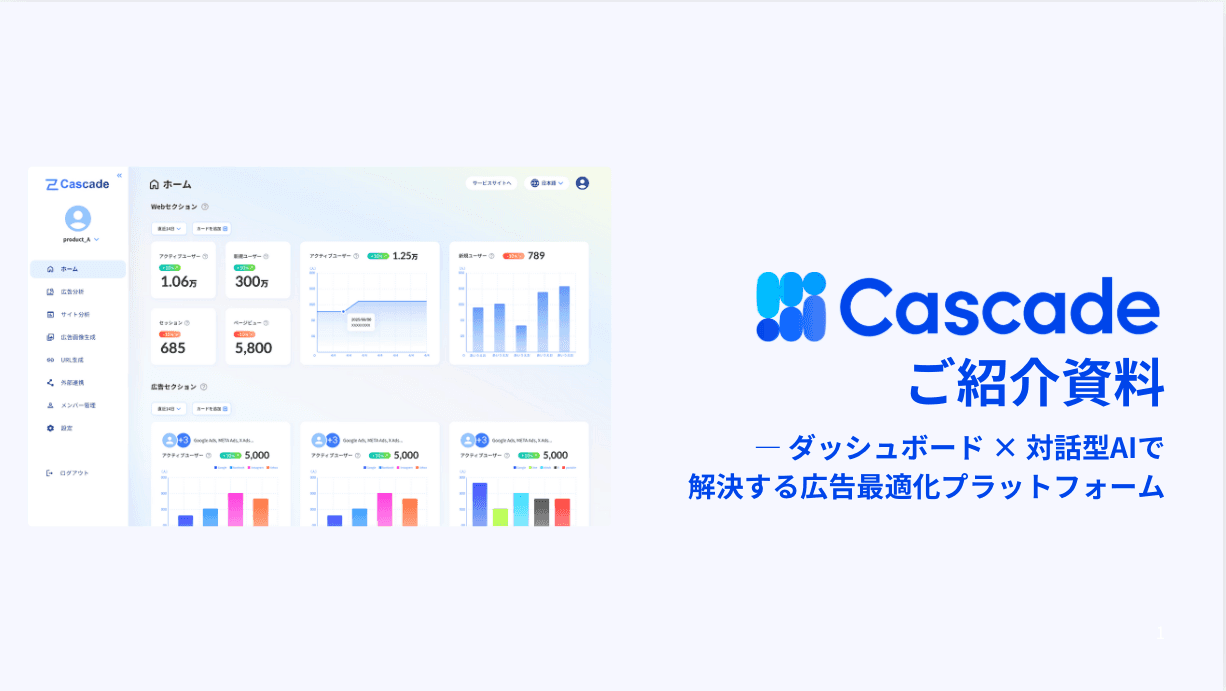
Table of Contents

© 2025 Cascade Inc, All Rights Reserved.

© 2025 Cascade Inc, All Rights Reserved.
© 2025 Cascade Inc, All Rights Reserved.