Apple Search Ads: Eight Tactics to Maximize ROAS & LTV
Apple Search Ads: Eight Tactics to Maximize ROAS & LTV
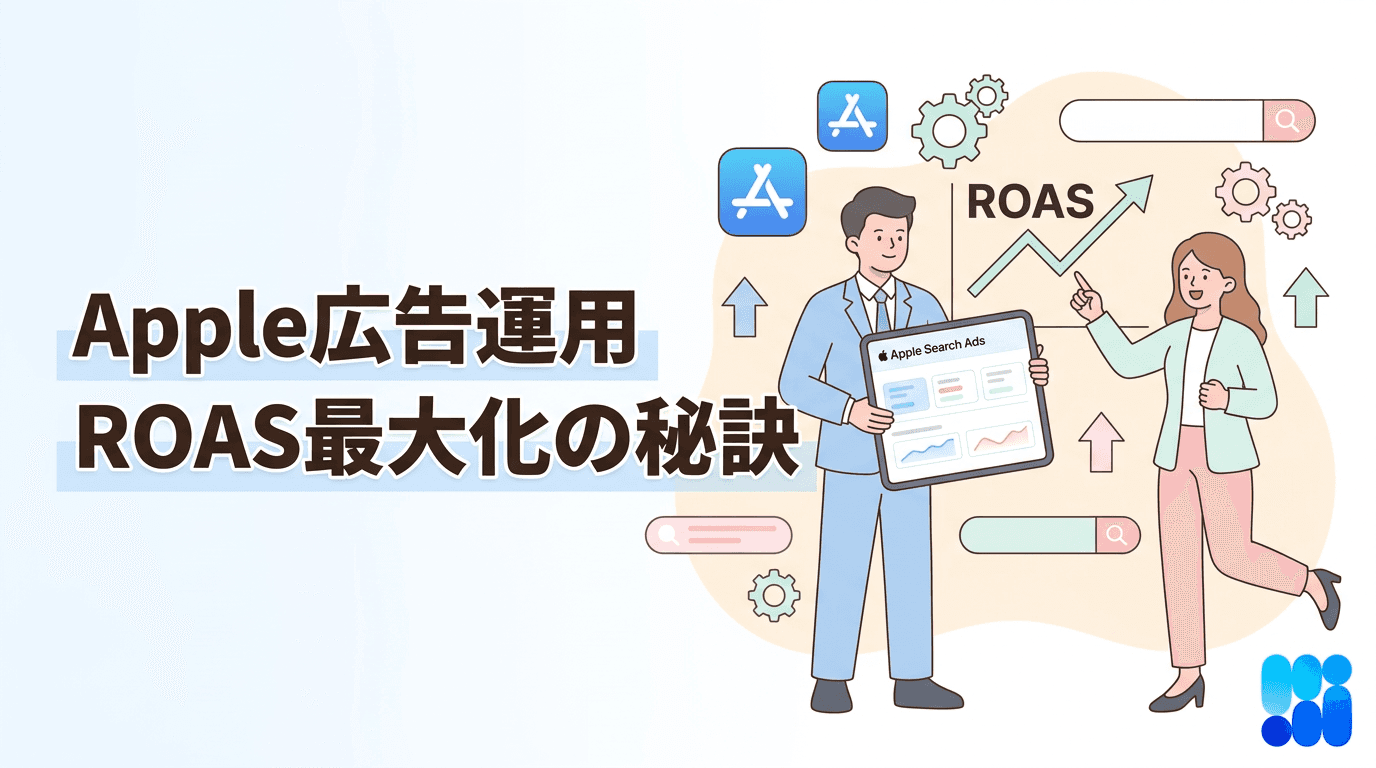
Introduction: "Thinking Method" to Achieve Results with Apple Ads
Apple Ads is one of the most powerful user acquisition channels for app marketers. As data shows that about 65% of all app downloads occur immediately after searching in the App Store, its user base is extremely high in purchase intent.
However, many marketers struggle to maximize their advertising return on ad spend (ROAS). Issues like wasted ad spend and low conversion rates stem from treating Apple Ads the same way as other advertising platforms.
In this article, we will introduce eight proven tips to achieve results with Apple Ads Management, going beyond just the basic setup. From campaign structure design to optimization and effectiveness measurement, we will explain a strategic approach to maximize ROAS.
1. The Foundation of Success: Designing Campaign Structure Before Keyword Selection
The foundation of scalable and efficient Apple Ads management is to design a clean and goal-oriented campaign structure "before" focusing on individual keyword selection.
The most recommended structure is a method of splitting campaigns based on user intent and campaign objectives. This allows for clearer reporting, accurate budget management, and bidding strategies according to keyword types.
Brand Campaign: Its goal is to protect your app name and related keywords from competitors. These keywords have extremely high user intent, so they must be guaranteed to show.
Competitor Campaign: This targets competitor app names to acquire users who are considering alternatives.
Category/General Campaign: This targets broad keywords related to app functionalities and categories that do not include brand names.
Discovery Campaign: Utilizing broad match and search match to discover new related keywords is the objective.
This structure is essential because the CPA (cost per acquisition) and ROAS objectives differ fundamentally across campaign types. Evaluating brand keywords and discovery keywords against the same ROAS target is not feasible, and separating them allows for accurate budget allocation and performance evaluation.
Pro Tip: For apps targeting multiple countries or regions, it is advisable to create country-specific campaigns considering language and user behavior differences.
2. The Secret Weapon to Reduce Costs: Maximizing the Synergy Between ASO and Apple Ads
Many are unaware that excellent ASO (App Store Optimization) can directly lower costs related to Apple Ads. These two are not independent measures; when combined, they create a powerful growth loop.
The mechanism of the "ASO and Apple Ads Growth Loop" is simple.
Use Apple Ads (especially discovery campaigns) to discover high-conversion-rate keywords.
Reflect the discovered keywords in your app's metadata (title, subtitle, keyword field) to enhance ASO.
Optimized metadata increases the "relevance score" of ads in Apple Ads auctions.
With a higher relevance score, it becomes easier to win auctions at lower cost-per-tap (CPT).
Apple Ads and App Store Optimization (ASO) are most effective when used together as part of a unified app growth strategy. With these two channels working in tandem, a performance loop is created that enhances both paid efficiency and organic visibility.
It is also important to maintain creative consistency across ad creatives, custom product pages, and the entire main page of the App Store. This improves user experience and further increases conversion rates.
3. Dramatically Improve CVR: Utilize Custom Product Pages (CPP) as "Ad Landing Pages"
Custom Product Pages (CPP) are a feature that allows you to create up to 35 different product pages in the App Store. The most powerful use of CPP in Apple Ads is to serve as a "landing page" dedicated to specific ad groups. This aligns the ad message and user experience post-click perfectly, dramatically improving conversion rates.
According to research by AppTweak, advertising variations on custom product pages enhance the conversion rate by approximately 6%.
The case of SoundCloud exemplifies this effect clearly.
SoundCloud delivered ads targeting the keywords of competing apps.
During this time, they created a CPP emphasizing their advantages over competitors (such as fewer ads, the ability to skip songs for free), setting it as the transition point for ads.
As a result of this strategy, the conversion rate increased by 58% and the cost per install (CPI) decreased by 39%.
Specific actions to effectively leverage CPP are as follows:
Align with User Intent: Link the ad group for the keyword "Yoga Workout" to a CPP that highlights the app's yoga features.
Differentiating in Competitor Campaigns: In ads targeting competitor app keywords, demonstrate superiority with a CPP that highlights your app's unique advantages.
Utilize for Seasons or Events: Create CPPs that promote special offers aligned with Black Friday or seasonal events.
4. Reduce Wasted Ad Spend: Strategically Differentiate Between Match Types and Excluded Keywords
To eliminate wasted ad spend and maximize efficiency, it is essential to strategically differentiate between match types and excluded keywords. In the previously mentioned campaign structure, it is fundamental to differentiate match types based on the goals of each campaign.
Match Type | Main Objective | Campaigns to Use |
Exact Match | To definitely capture known keywords with high intent | Brand, Competitor, Category |
Broad Match | To discover new related keywords | Discovery |
Search Match | To automatically discover new keywords based on metadata | Discovery |
The key concept here is the flow of supplying keywords found in discovery campaigns to other campaigns. Keywords that show high performance in broad match or search match should be transitioned into "exact match" keywords for brand, competitor, and category campaigns.
One of the most common and costly mistakes is forgetting to set up excluded keywords. Once keywords are transitioned to an exact match campaign, they must be added as “exact match excluded keywords” in the discovery campaign. Failure to do so will lead to "internal cannibalization," where bids compete with each other within your campaigns, wasting your budget.
This process is the most crucial workflow to strategically shift advertising budgets from an uncertain investment such as "keyword discovery" to a reliable investment that generates "predictable returns."
5. Don’t Rely on Gut Instincts: Optimize Bids Based on User Intent and Data
In Apple Ads auctions, the highest bidder does not always win. The auction winner is determined by a comprehensive assessment of the bid amount and the ad's relevance score. This means that if the relevance is high, you can win with a lower bid amount.
Instead of relying on gut instinct, develop a data-driven bidding strategy. First, it is recommended to calculate the starting bid using the following formula.
Bid Amount = Target CPA × Conversion Rate (CVR)
This calculation allows you to link the bid amount to specific business goals. The key to effectively utilizing this calculation is to understand that CVR can vary significantly by campaign type. Therefore, you need to segment bid amounts according to user intent.
Brand Keywords: Given their high intent, it justifies higher bids to protect the brand space.
Category/General Keywords: With medium intent, moderate bids are required.
Competitor/Discovery Keywords: Since the intent is low or uncertain, conservative bidding should begin until performance is proven.
Another common mistake is changing bid amounts too drastically at once. To accurately assess the impact on performance, aim for gradual adjustments of about 20%.
6. Understand All Ad Placements: An Approach Aligned with the User's "Purchase Intent Stage"
Apple Ads has four ad placements, each varying in the user's "purchase intent stage (intent gradient)". By strategically utilizing all placements, you can have touchpoints at every stage of the user's discovery journey.
Ad Placement | User Intent | Strategic Goals |
Today Tab | Discovery/Browsing | Increase brand awareness, large-scale reach |
Search Tab | Casual exploration | Early-stage discovery, brand recall |
Product Pages | Comparison/Consideration | Acquiring users from competitors, reaching high LTV users |
Search Results | High purchase intent | Direct download promotion, high-efficiency acquisition |
While search result ads capture conversions at the bottom of the funnel, the Today Tab and Search Tab build brand awareness at the top of the funnel, stimulating future search behaviors. Product page ads play a critical role at mid-funnel, pulling users who are in the consideration stage away from competitors. By combining all placements in this way, a comprehensive approach is possible that covers all touchpoints in the user consideration stage, eliminating opportunity loss.
7. Accelerate Growth: Use Automation as a Tool for "Scaling" Rather Than Just "Time-Saving"
As campaigns expand across multiple countries, keywords, and ad groups, manual bid management becomes inefficient and prone to error. Here, automation functions not merely as a time-saving tool but as a strategic "scaling" tool.
Using rule-based automation tools like AppTweak or Cascade, you can achieve the following strategic adjustments:
Cost Management: Automatically lower bids for keywords exceeding the set CPA cap.
Maximizing Opportunity: Automatically reallocate budgets for keywords with high ROAS.
Efficiency: Automatically pause underperforming keywords.
This approach frees marketers from daily fine-tuning bid adjustments and allows them to focus on more advanced strategy planning, such as optimizing creatives and market analysis.
8. Common Pitfalls to Avoid: Top 3 Common Mistakes with Apple Ads
Lastly, we present three costly mistakes that many marketers fall into. Avoiding these alone can greatly enhance the quality of operations.
Internal competition due to keyword duplication: Activating the same keyword in multiple campaigns leads to bidding competition between your own ads, unnecessarily driving up the CPT. It also complicates the analysis of which campaigns are contributing to performance. Clearly separate campaign structures to prevent keyword duplication.
Excessive budget allocation to discovery campaigns: The goal of discovery campaigns is strictly to "discover" new keywords, not to drive a high volume of downloads. It is wise to concentrate the bulk of the budget (e.g., 80%) on campaigns with demonstrated performance such as brand, competitor, and category, allocating only a portion (e.g., 20%) to discovery campaigns.
Confusing ROAS and ROI: While these two metrics are similar, they have different meanings. ROAS (Return on Advertising Spend) measures the "revenue" generated per dollar spent on specific advertising channels like Apple Ads. On the other hand, ROI (Return on Investment) calculates the overall "profit" derived from all marketing activities, including labor costs. In daily campaign optimization, ROAS is the more direct and important metric.
Conclusion: Maximizing the Potential of Apple Ads through Strategic Management
The key to success with Apple Ads is not just executing campaigns but adopting a structured, data-driven, and continuously optimized approach.
By building a solid campaign structure, leveraging synergy with ASO, and strategically utilizing tools such as custom product pages and automation, it is possible to eliminate wasted ad spend and maximize ROAS. However, consistently executing these advanced strategies manually, especially as scale expands, poses a significant challenge for many marketing teams. Therefore, tools that streamline processes and accelerate data-driven decision-making are indispensable.
AI-powered marketing and ad optimization platforms like Cascade are designed to simplify these complex tasks. Cascade analyzes intricate performance data in seconds, offers optimization proposals for budgets, and streamlines decision-making, enabling marketers to implement advanced strategies like those discussed in this article with less effort.
For further details on how to automate the strategies discussed in this article using AI to maximize ROAS, please visit the official website of Cascade.
Introduction: "Thinking Method" to Achieve Results with Apple Ads
Apple Ads is one of the most powerful user acquisition channels for app marketers. As data shows that about 65% of all app downloads occur immediately after searching in the App Store, its user base is extremely high in purchase intent.
However, many marketers struggle to maximize their advertising return on ad spend (ROAS). Issues like wasted ad spend and low conversion rates stem from treating Apple Ads the same way as other advertising platforms.
In this article, we will introduce eight proven tips to achieve results with Apple Ads Management, going beyond just the basic setup. From campaign structure design to optimization and effectiveness measurement, we will explain a strategic approach to maximize ROAS.
1. The Foundation of Success: Designing Campaign Structure Before Keyword Selection
The foundation of scalable and efficient Apple Ads management is to design a clean and goal-oriented campaign structure "before" focusing on individual keyword selection.
The most recommended structure is a method of splitting campaigns based on user intent and campaign objectives. This allows for clearer reporting, accurate budget management, and bidding strategies according to keyword types.
Brand Campaign: Its goal is to protect your app name and related keywords from competitors. These keywords have extremely high user intent, so they must be guaranteed to show.
Competitor Campaign: This targets competitor app names to acquire users who are considering alternatives.
Category/General Campaign: This targets broad keywords related to app functionalities and categories that do not include brand names.
Discovery Campaign: Utilizing broad match and search match to discover new related keywords is the objective.
This structure is essential because the CPA (cost per acquisition) and ROAS objectives differ fundamentally across campaign types. Evaluating brand keywords and discovery keywords against the same ROAS target is not feasible, and separating them allows for accurate budget allocation and performance evaluation.
Pro Tip: For apps targeting multiple countries or regions, it is advisable to create country-specific campaigns considering language and user behavior differences.
2. The Secret Weapon to Reduce Costs: Maximizing the Synergy Between ASO and Apple Ads
Many are unaware that excellent ASO (App Store Optimization) can directly lower costs related to Apple Ads. These two are not independent measures; when combined, they create a powerful growth loop.
The mechanism of the "ASO and Apple Ads Growth Loop" is simple.
Use Apple Ads (especially discovery campaigns) to discover high-conversion-rate keywords.
Reflect the discovered keywords in your app's metadata (title, subtitle, keyword field) to enhance ASO.
Optimized metadata increases the "relevance score" of ads in Apple Ads auctions.
With a higher relevance score, it becomes easier to win auctions at lower cost-per-tap (CPT).
Apple Ads and App Store Optimization (ASO) are most effective when used together as part of a unified app growth strategy. With these two channels working in tandem, a performance loop is created that enhances both paid efficiency and organic visibility.
It is also important to maintain creative consistency across ad creatives, custom product pages, and the entire main page of the App Store. This improves user experience and further increases conversion rates.
3. Dramatically Improve CVR: Utilize Custom Product Pages (CPP) as "Ad Landing Pages"
Custom Product Pages (CPP) are a feature that allows you to create up to 35 different product pages in the App Store. The most powerful use of CPP in Apple Ads is to serve as a "landing page" dedicated to specific ad groups. This aligns the ad message and user experience post-click perfectly, dramatically improving conversion rates.
According to research by AppTweak, advertising variations on custom product pages enhance the conversion rate by approximately 6%.
The case of SoundCloud exemplifies this effect clearly.
SoundCloud delivered ads targeting the keywords of competing apps.
During this time, they created a CPP emphasizing their advantages over competitors (such as fewer ads, the ability to skip songs for free), setting it as the transition point for ads.
As a result of this strategy, the conversion rate increased by 58% and the cost per install (CPI) decreased by 39%.
Specific actions to effectively leverage CPP are as follows:
Align with User Intent: Link the ad group for the keyword "Yoga Workout" to a CPP that highlights the app's yoga features.
Differentiating in Competitor Campaigns: In ads targeting competitor app keywords, demonstrate superiority with a CPP that highlights your app's unique advantages.
Utilize for Seasons or Events: Create CPPs that promote special offers aligned with Black Friday or seasonal events.
4. Reduce Wasted Ad Spend: Strategically Differentiate Between Match Types and Excluded Keywords
To eliminate wasted ad spend and maximize efficiency, it is essential to strategically differentiate between match types and excluded keywords. In the previously mentioned campaign structure, it is fundamental to differentiate match types based on the goals of each campaign.
Match Type | Main Objective | Campaigns to Use |
Exact Match | To definitely capture known keywords with high intent | Brand, Competitor, Category |
Broad Match | To discover new related keywords | Discovery |
Search Match | To automatically discover new keywords based on metadata | Discovery |
The key concept here is the flow of supplying keywords found in discovery campaigns to other campaigns. Keywords that show high performance in broad match or search match should be transitioned into "exact match" keywords for brand, competitor, and category campaigns.
One of the most common and costly mistakes is forgetting to set up excluded keywords. Once keywords are transitioned to an exact match campaign, they must be added as “exact match excluded keywords” in the discovery campaign. Failure to do so will lead to "internal cannibalization," where bids compete with each other within your campaigns, wasting your budget.
This process is the most crucial workflow to strategically shift advertising budgets from an uncertain investment such as "keyword discovery" to a reliable investment that generates "predictable returns."
5. Don’t Rely on Gut Instincts: Optimize Bids Based on User Intent and Data
In Apple Ads auctions, the highest bidder does not always win. The auction winner is determined by a comprehensive assessment of the bid amount and the ad's relevance score. This means that if the relevance is high, you can win with a lower bid amount.
Instead of relying on gut instinct, develop a data-driven bidding strategy. First, it is recommended to calculate the starting bid using the following formula.
Bid Amount = Target CPA × Conversion Rate (CVR)
This calculation allows you to link the bid amount to specific business goals. The key to effectively utilizing this calculation is to understand that CVR can vary significantly by campaign type. Therefore, you need to segment bid amounts according to user intent.
Brand Keywords: Given their high intent, it justifies higher bids to protect the brand space.
Category/General Keywords: With medium intent, moderate bids are required.
Competitor/Discovery Keywords: Since the intent is low or uncertain, conservative bidding should begin until performance is proven.
Another common mistake is changing bid amounts too drastically at once. To accurately assess the impact on performance, aim for gradual adjustments of about 20%.
6. Understand All Ad Placements: An Approach Aligned with the User's "Purchase Intent Stage"
Apple Ads has four ad placements, each varying in the user's "purchase intent stage (intent gradient)". By strategically utilizing all placements, you can have touchpoints at every stage of the user's discovery journey.
Ad Placement | User Intent | Strategic Goals |
Today Tab | Discovery/Browsing | Increase brand awareness, large-scale reach |
Search Tab | Casual exploration | Early-stage discovery, brand recall |
Product Pages | Comparison/Consideration | Acquiring users from competitors, reaching high LTV users |
Search Results | High purchase intent | Direct download promotion, high-efficiency acquisition |
While search result ads capture conversions at the bottom of the funnel, the Today Tab and Search Tab build brand awareness at the top of the funnel, stimulating future search behaviors. Product page ads play a critical role at mid-funnel, pulling users who are in the consideration stage away from competitors. By combining all placements in this way, a comprehensive approach is possible that covers all touchpoints in the user consideration stage, eliminating opportunity loss.
7. Accelerate Growth: Use Automation as a Tool for "Scaling" Rather Than Just "Time-Saving"
As campaigns expand across multiple countries, keywords, and ad groups, manual bid management becomes inefficient and prone to error. Here, automation functions not merely as a time-saving tool but as a strategic "scaling" tool.
Using rule-based automation tools like AppTweak or Cascade, you can achieve the following strategic adjustments:
Cost Management: Automatically lower bids for keywords exceeding the set CPA cap.
Maximizing Opportunity: Automatically reallocate budgets for keywords with high ROAS.
Efficiency: Automatically pause underperforming keywords.
This approach frees marketers from daily fine-tuning bid adjustments and allows them to focus on more advanced strategy planning, such as optimizing creatives and market analysis.
8. Common Pitfalls to Avoid: Top 3 Common Mistakes with Apple Ads
Lastly, we present three costly mistakes that many marketers fall into. Avoiding these alone can greatly enhance the quality of operations.
Internal competition due to keyword duplication: Activating the same keyword in multiple campaigns leads to bidding competition between your own ads, unnecessarily driving up the CPT. It also complicates the analysis of which campaigns are contributing to performance. Clearly separate campaign structures to prevent keyword duplication.
Excessive budget allocation to discovery campaigns: The goal of discovery campaigns is strictly to "discover" new keywords, not to drive a high volume of downloads. It is wise to concentrate the bulk of the budget (e.g., 80%) on campaigns with demonstrated performance such as brand, competitor, and category, allocating only a portion (e.g., 20%) to discovery campaigns.
Confusing ROAS and ROI: While these two metrics are similar, they have different meanings. ROAS (Return on Advertising Spend) measures the "revenue" generated per dollar spent on specific advertising channels like Apple Ads. On the other hand, ROI (Return on Investment) calculates the overall "profit" derived from all marketing activities, including labor costs. In daily campaign optimization, ROAS is the more direct and important metric.
Conclusion: Maximizing the Potential of Apple Ads through Strategic Management
The key to success with Apple Ads is not just executing campaigns but adopting a structured, data-driven, and continuously optimized approach.
By building a solid campaign structure, leveraging synergy with ASO, and strategically utilizing tools such as custom product pages and automation, it is possible to eliminate wasted ad spend and maximize ROAS. However, consistently executing these advanced strategies manually, especially as scale expands, poses a significant challenge for many marketing teams. Therefore, tools that streamline processes and accelerate data-driven decision-making are indispensable.
AI-powered marketing and ad optimization platforms like Cascade are designed to simplify these complex tasks. Cascade analyzes intricate performance data in seconds, offers optimization proposals for budgets, and streamlines decision-making, enabling marketers to implement advanced strategies like those discussed in this article with less effort.
For further details on how to automate the strategies discussed in this article using AI to maximize ROAS, please visit the official website of Cascade.
\FreeDownload Now/
\FreeDownload Now/
\FreeDownload Now/
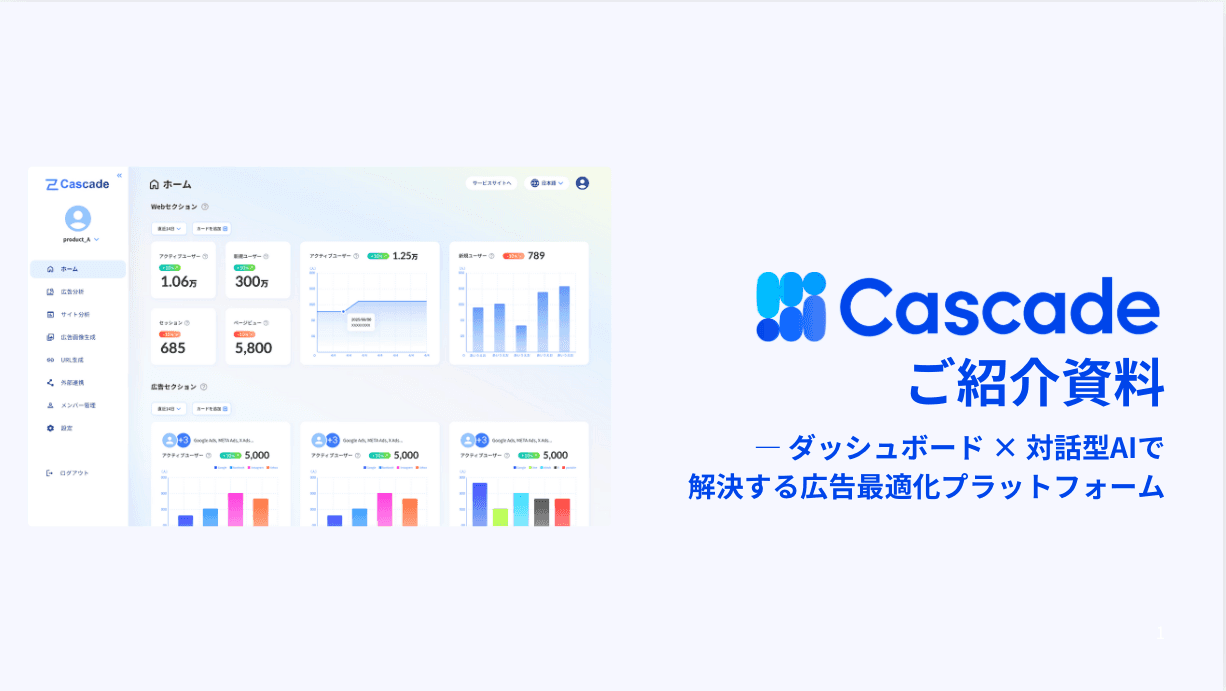
Table of Contents

© 2025 Cascade Inc, All Rights Reserved.

© 2025 Cascade Inc, All Rights Reserved.
© 2025 Cascade Inc, All Rights Reserved.