How will advertising operations change with AI? An in-depth explanation of the forefront of automation [Latest in 2026]
Feb 15, 2026

The world of digital advertising is at a major turning point right now. With the rapid evolution of AI technology, tasks such as bid adjustments, targeting, and creative production, which were previously handled manually by skilled operators, are increasingly being automated. OpenAI CEO Sam Altman predicts that "AI will replace 95% of advertising agency operations," and Meta has announced a complete automation plan for advertising operations by 2026. Spending related to AI marketing is also expected to exceed $107 billion by 2028. In this article, we comprehensively explain the essential information that marketers should understand, from the basics of AI advertising operations to the latest trends, how to choose tools, and key points for ensuring the success of automation.
What is AI Advertising? The Transformation Happening in Advertising Operations
The introduction of AI technology is rapidly advancing in the field of advertising operations. First, let's outline the basic definition of AI advertising and why it is attracting so much attention right now.
Definition of AI Advertising and Differences from Traditional Advertising Operations
AI advertising refers to a method that enhances and automates the operational processes of ad distribution, optimization, and analysis using artificial intelligence (AI). In traditional advertising operations, operators manually selected keywords, adjusted bid amounts, set target audiences, and conducted A/B tests of creatives while repeatedly checking daily data for improvements.
On the other hand, in AI advertising operations, machine learning algorithms analyze vast amounts of data in real-time, automatically determining optimal bid amounts, targeting, and combinations of creatives. While traditional operations relied on "human experience and intuition," AI advertising operations are "data-driven" and can handle an unprecedented scale of variables simultaneously, which is the major difference.
For instance, manually adjusting bid amounts for thousands of keywords every day is not realistic. However, with AI, it can automatically execute the optimal bid for each auction by combining multiple signals such as time of day, device, user characteristics, and past conversion data.
Why AI Advertising is Gaining Attention Now
There are several structural changes underpinning the heightened interest in AI advertising.
First, there is the dramatic evolution of AI technology itself. The year 2025 is referred to as the "year of AI agents," marking the emergence of "agent-type AI" that acts autonomously rather than just analyzing data. 2026 is positioned as the year when this AI agent will be trusted and fully utilized in practice.
Second, the complexity of advertising operations is increasing. With the diversification of platforms, stronger privacy regulations, and changes in consumer behavior, the variables that operators need to consider are growing each year. It is becoming increasingly difficult to optimize everything manually.
Third, there are significant movements within the industry. Meta has announced plans to fully automate advertisement operations by 2026, and Google is rapidly expanding its automation capabilities. AI marketing spending is projected to reach $47.32 billion by 2025 and exceed $107 billion by 2028. Investment in advertising automation AI is no longer just a story for a few advanced companies; it has become a trend across the industry.
In this context, AI advertising operations have entered a phase where the focus is not on whether to implement them, but on how to implement and utilize them.
Main Areas of AI Advertising Operations
AI advertising operations have a wide range of applications. Here, we will explain four areas where active utilization is currently progressing.
Automated Optimization of Bids and Budget Allocation
The area where the most implementation of AI advertising operations is progressing is the automated optimization of bids and budget allocation. Examples include Google Ads' Smart Bidding and Meta Ads' Advantage+ Shopping Campaign.
Previously, operators manually adjusted bid amounts and daily budgets according to CPA (cost per acquisition) or ROAS (return on ad spend) targets for each campaign. With AI's automated bidding, numerous signals such as user search intentions, time of day, device, region, and past behavior history are analyzed in real-time to calculate the optimal bid amount for each auction.
Advanced AI tools also allow for the optimization of budget allocation across multiple campaigns and advertising platforms. For example, it can automatically reallocate budgets between Google Ads and Meta Ads based on performance to maximize overall ROAS.
Advanced Targeting (AI Persona)
A trend drawing attention in 2026 is dynamic targeting using AI personas. Traditional targeting relied mostly on static segments based on demographic information such as age, gender, and region, as well as interest categories.
AI persona refers to user profiles dynamically generated by AI based on real-time analysis of user behavior data, purchase history, content consumption patterns, etc. Instead of a fixed persona like "a company employee in their 30s," it creates a behavior-based, detailed persona such as "an individual who is currently comparing smartwatches and is becoming health-conscious, browsing e-commerce sites on weekday evenings."
As a result, even in an environment where the cessation of cookies (data for user tracking stored in browsers) is progressing, it becomes possible to utilize first-party data (data collected by one's own company) for highly accurate targeting.
Automated Generation of Advertising Creatives
Due to the evolution of generative AI (AI technology that generates new content such as text and images), the process of producing advertising creatives is also undergoing significant changes. Previously, the production of creatives for banner ads and text ads could take several weeks, including planning, design, copywriting, and reviews.
With AI-assisted automated generation of advertising creatives, this process is shortened to a matter of hours. By simply inputting product images and brand guidelines, multiple patterns of advertising banners and text copies are automatically created, and AI can predict performance to prioritize the distribution of promising creatives.
Meta already provides features for automatic generation of background changes in ad images and text variations in Advantage+ creatives. It is expected that the automatic generation of video ads will also progress further in the future.
Automation of Reporting and Analysis
A significant portion of the advertising operations personnel's time is spent on reporting and data analysis. The tasks of collecting data from multiple platforms, consolidating it into spreadsheets, creating graphs, and adding insights occur on a weekly or monthly basis.
By utilizing AI advertising operation tools, most of these analysis tasks can be automated. Many tools already implement features that allow AI to automatically detect performance anomalies, estimate causes, and suggest improvement actions. For instance, an insight like "the reason for a 20% increase in CPA compared to last week is due to intensified competition for certain keyword groups, and I recommend reassessing the bidding strategy" could be generated automatically.
Types of AI Advertising Operation Tools and How to Choose
Automated AI tools for advertising operations can be broadly classified into three categories. It is crucial to understand the characteristics of each and select a tool that matches your company's challenges.
Platform-Built In AI (Google P-MAX, Meta Advantage+)
The closest AI advertising operation tools are the AI features provided by the advertising platforms themselves. Representative examples include Google's P-MAX (Performance Max) campaigns and Meta's Advantage+.
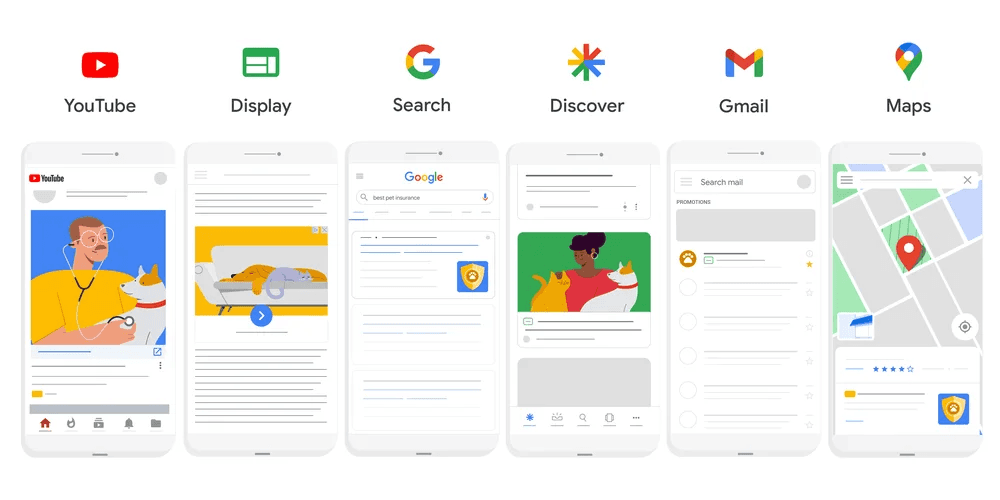
P-MAX distributes ads across all Google ad placements, including search, display, YouTube, Gmail, and maps, automatically determining the optimal distribution surface, target, and bid using AI. Advantage+ also automates ad delivery optimization across Meta's entire platform.
The advantages of these tools are that they can be utilized without additional costs and have a low barrier to adoption. However, they typically remain limited to optimizations within specific platforms and cannot handle cross-platform optimizations.
Third-Party AI Advertising Operation Tools
Third-party tools manage multiple advertising platforms and optimize them using AI. Shirofune is a representative example in the domestic market.
Tools in this category can centralize the management of multiple mediums such as Google Ads, Meta Ads, and Yahoo! Ads, allowing budget allocation optimization and integrated reporting across platforms. For companies operating multiple mediums, this can significantly reduce operational workload.
However, many third-party tools typically use a "rule-based + machine learning" approach that optimizes based on pre-set rules and algorithms, meaning operators need to perform a certain level of configuration and judgment, which is a commonality with traditional methods.
AI Agent-Type Tools (Next-Generation)
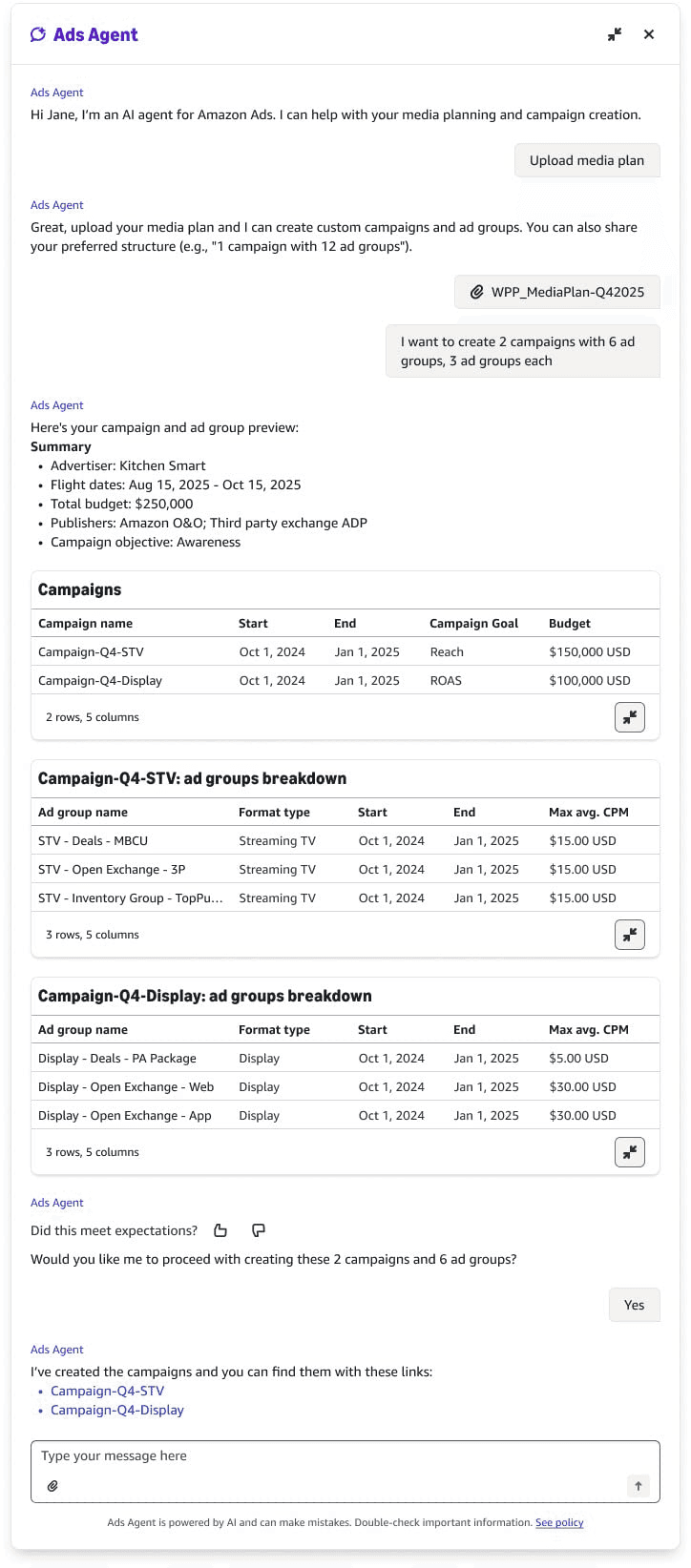
AI agent-type advertising operation tools, which have rapidly gained attention between 2025 and 2026, differ fundamentally from traditional tools in that they autonomously perform the operations themselves rather than just "supporting operators."
An AI agent operates by simply setting a goal (for example, achieving a ROAS of 500%), allowing AI to analyze data autonomously, formulate hypotheses, execute strategies, and verify results in a complete PDCA (Plan-Do-Check-Act) cycle without human intervention all day, every day.
Domestic services like Cascade adopt an approach that automates the entire advertising operation using AI agents.
This category is still in its developing stages, but it holds the potential for dramatic reductions in operational workload and optimizations at speeds unmanageable by humans. The year 2026 is said to be the "year to trust AI agents," indicative of the maturation of these tools.
Advantages and Disadvantages of AI Advertising Operations
When considering the transition to AI advertising operations, it is essential to have a correct understanding of both the merits and demerits.
Advantages: Reduced Workload, Improved ROAS, Speed
The greatest advantage of AI advertising operations is the substantial reduction in operational workload. There are numerous cases where AI handling routine tasks such as bid adjustments, reporting, and creative testing has reduced the work hours of operators by over 50%. This not only saves labor costs but also allows personnel to focus on more strategic tasks, which is a noteworthy ancillary benefit.
Improving ROAS (Return On Ad Spend) is also a significant advantage. AI continuously monitors data in real-time 24/7, consistently executing optimal bids and targeting. While humans check and adjust a few times a day, AI can perform thousands of optimizations daily. This difference contributes to the long-term improvement of ROAS.
In terms of speed, the advantages of AI are evident. Processes that previously took several days to weeks, such as launching new campaigns, producing creatives, and responding immediately to performance declines, can now be shortened to a matter of hours or minutes.
Disadvantages: Black Box Concerns and AI Slop Risks
One of the most concerning issues is the black box nature of operations. It can be unclear why AI made certain decisions or why it targeted specific audiences. This issue is particularly prominent in platform-built AI like P-MAX, where operators may find it difficult to grasp the details of delivery destinations and targeting.
Another crucial challenge is the problem of AI slop. AI slop refers to low-quality content generated en masse by AI, and by 2025, it has begun to be recognized as a serious issue within the advertising industry. While AI has made it possible to generate advertising creatives in large quantities, the risk arises that quality control may not keep pace, leading to ads that diminish brand image.
Five Points for Successfully Automating Advertising Operations
Just because you implement AI automation tools for advertising operations does not mean everything will go smoothly automatically. To maximize results, it is essential to keep the following five points in mind.
(1) Start with Clear KPIs and Goal Setting
AI functions by optimizing toward given goals. Set specific numerical targets such as "reduce CPA from the current 3,000 yen to 2,000 yen" or "scale monthly ad spend 1.5 times while maintaining a ROAS of 400%."
(2) Ensure Adequate Data Volume
The accuracy of AI heavily depends on data volume. It is generally recommended to have over 30 conversions within the past 30 days for Google's Smart Bidding. If data is lacking, it is effective to set micro-conversions (such as adding to cart or starting form inputs) to supplement data volume.
(3) Allow for a Learning Period and Don't Overreact to Short-Term Results
During the learning period right after implementation (typically 1-2 weeks), performance may not stabilize. Frequent changes to settings during this phase can reset the learning process. It is important to observe the AI's learning for at least two weeks without making significant changes.
(4) Do Not Neglect Human Monitoring and Quality Control
Clearly define the roles that humans must take on, such as checking the compliance of AI-generated creatives with brand guidelines, verifying the quality of delivery destinations, detecting anomalies, and conducting cause analysis. Automating advertising operations transforms human roles from "workers" to "supervisors and strategists."
(5) Gradually Expand the Scope of Automation
Start with automated bidding, and once results are confirmed, proceed to automated targeting, and next automate creative generation. By taking steps, you can enjoy the benefits of AI advertising operations while minimizing risks.
Predictions for AI Advertising Operations Trends After 2026
It is anticipated that the use of AI in the advertising industry will accelerate even more after 2026.
Full Spread of AI Agents
If 2025 was the year of AI agents, then 2026 will be the year to "trust and deploy AI agents in practice." The transfer of many routine operational tasks to AI agents is irreversible, and it is expected that the advertising operations field will undergo significant transformations in the next 2-3 years. For small and medium-sized enterprises and e-commerce operators, this presents a significant opportunity to achieve advanced advertising operations with smaller teams.
Utilization of First-Party Data in the Era of Cookie Abolition
With the phased abolition of third-party cookies, it is becoming increasingly important to analyze the customer data (purchase history, on-site behavior, email open rates, etc.) that companies possess and to build high-precision predictive models. It is essential for companies to prepare their foundation for collecting first-party data now, as it will serve as a source of competitive advantage post-2026.
"Collaboration with AI" is the Key to Success
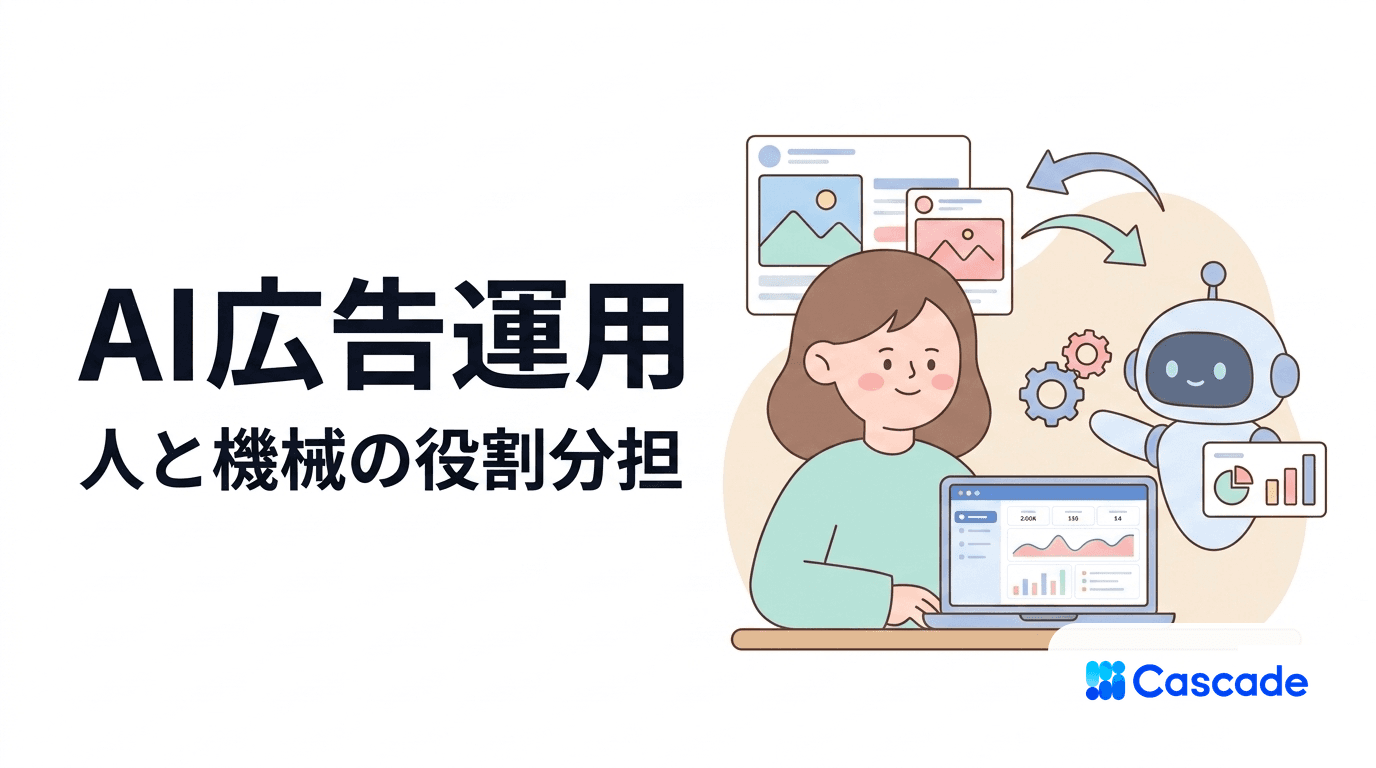
AI surpasses humans in massive data processing, pattern recognition, and real-time optimization. However, in areas such as formulating creative strategies that reflect brand worldview and drafting medium to long-term strategies considering changes in market conditions, human judgment remains indispensable. Clearly defining the tasks to be handled by AI and those by humans and establishing an operational structure that combines the strengths of both will be crucial for the success of advertising operations.
Conclusion
This article provided a comprehensive overview of the current state and future of AI advertising operations, from basic definitions to the latest trends, how to choose tools, and points for success.
AI advertising operations have entered the phase of "how to utilize them." AI marketing expenditures are expected to exceed $107 billion by 2028, as major platforms push for complete automation.
The areas of application range from bid optimization to creative generation. It serves as a means to simultaneously achieve reductions in operational workload and improvements in ROAS.
Choose tools from three categories that suit your company. Each has its features, including platform-built, third-party, and AI agent types.
The key to success is not "leaving it to AI" but "collaborating with AI." Keeping in mind the five points will lead to results.
From 2026 onward, the full spread of AI agents will progress. It is important to get familiar with AI advertising operations now and prepare your company's data and operational structure.
The pace of evolution in AI technology will continue to accelerate in the future. Let us not lag behind in the wave of change and aim to realize advertising operations that harness the full potential of AI.
The world of digital advertising is at a major turning point right now. With the rapid evolution of AI technology, tasks such as bid adjustments, targeting, and creative production, which were previously handled manually by skilled operators, are increasingly being automated. OpenAI CEO Sam Altman predicts that "AI will replace 95% of advertising agency operations," and Meta has announced a complete automation plan for advertising operations by 2026. Spending related to AI marketing is also expected to exceed $107 billion by 2028. In this article, we comprehensively explain the essential information that marketers should understand, from the basics of AI advertising operations to the latest trends, how to choose tools, and key points for ensuring the success of automation.
What is AI Advertising? The Transformation Happening in Advertising Operations
The introduction of AI technology is rapidly advancing in the field of advertising operations. First, let's outline the basic definition of AI advertising and why it is attracting so much attention right now.
Definition of AI Advertising and Differences from Traditional Advertising Operations
AI advertising refers to a method that enhances and automates the operational processes of ad distribution, optimization, and analysis using artificial intelligence (AI). In traditional advertising operations, operators manually selected keywords, adjusted bid amounts, set target audiences, and conducted A/B tests of creatives while repeatedly checking daily data for improvements.
On the other hand, in AI advertising operations, machine learning algorithms analyze vast amounts of data in real-time, automatically determining optimal bid amounts, targeting, and combinations of creatives. While traditional operations relied on "human experience and intuition," AI advertising operations are "data-driven" and can handle an unprecedented scale of variables simultaneously, which is the major difference.
For instance, manually adjusting bid amounts for thousands of keywords every day is not realistic. However, with AI, it can automatically execute the optimal bid for each auction by combining multiple signals such as time of day, device, user characteristics, and past conversion data.
Why AI Advertising is Gaining Attention Now
There are several structural changes underpinning the heightened interest in AI advertising.
First, there is the dramatic evolution of AI technology itself. The year 2025 is referred to as the "year of AI agents," marking the emergence of "agent-type AI" that acts autonomously rather than just analyzing data. 2026 is positioned as the year when this AI agent will be trusted and fully utilized in practice.
Second, the complexity of advertising operations is increasing. With the diversification of platforms, stronger privacy regulations, and changes in consumer behavior, the variables that operators need to consider are growing each year. It is becoming increasingly difficult to optimize everything manually.
Third, there are significant movements within the industry. Meta has announced plans to fully automate advertisement operations by 2026, and Google is rapidly expanding its automation capabilities. AI marketing spending is projected to reach $47.32 billion by 2025 and exceed $107 billion by 2028. Investment in advertising automation AI is no longer just a story for a few advanced companies; it has become a trend across the industry.
In this context, AI advertising operations have entered a phase where the focus is not on whether to implement them, but on how to implement and utilize them.
Main Areas of AI Advertising Operations
AI advertising operations have a wide range of applications. Here, we will explain four areas where active utilization is currently progressing.
Automated Optimization of Bids and Budget Allocation
The area where the most implementation of AI advertising operations is progressing is the automated optimization of bids and budget allocation. Examples include Google Ads' Smart Bidding and Meta Ads' Advantage+ Shopping Campaign.
Previously, operators manually adjusted bid amounts and daily budgets according to CPA (cost per acquisition) or ROAS (return on ad spend) targets for each campaign. With AI's automated bidding, numerous signals such as user search intentions, time of day, device, region, and past behavior history are analyzed in real-time to calculate the optimal bid amount for each auction.
Advanced AI tools also allow for the optimization of budget allocation across multiple campaigns and advertising platforms. For example, it can automatically reallocate budgets between Google Ads and Meta Ads based on performance to maximize overall ROAS.
Advanced Targeting (AI Persona)
A trend drawing attention in 2026 is dynamic targeting using AI personas. Traditional targeting relied mostly on static segments based on demographic information such as age, gender, and region, as well as interest categories.
AI persona refers to user profiles dynamically generated by AI based on real-time analysis of user behavior data, purchase history, content consumption patterns, etc. Instead of a fixed persona like "a company employee in their 30s," it creates a behavior-based, detailed persona such as "an individual who is currently comparing smartwatches and is becoming health-conscious, browsing e-commerce sites on weekday evenings."
As a result, even in an environment where the cessation of cookies (data for user tracking stored in browsers) is progressing, it becomes possible to utilize first-party data (data collected by one's own company) for highly accurate targeting.
Automated Generation of Advertising Creatives
Due to the evolution of generative AI (AI technology that generates new content such as text and images), the process of producing advertising creatives is also undergoing significant changes. Previously, the production of creatives for banner ads and text ads could take several weeks, including planning, design, copywriting, and reviews.
With AI-assisted automated generation of advertising creatives, this process is shortened to a matter of hours. By simply inputting product images and brand guidelines, multiple patterns of advertising banners and text copies are automatically created, and AI can predict performance to prioritize the distribution of promising creatives.
Meta already provides features for automatic generation of background changes in ad images and text variations in Advantage+ creatives. It is expected that the automatic generation of video ads will also progress further in the future.
Automation of Reporting and Analysis
A significant portion of the advertising operations personnel's time is spent on reporting and data analysis. The tasks of collecting data from multiple platforms, consolidating it into spreadsheets, creating graphs, and adding insights occur on a weekly or monthly basis.
By utilizing AI advertising operation tools, most of these analysis tasks can be automated. Many tools already implement features that allow AI to automatically detect performance anomalies, estimate causes, and suggest improvement actions. For instance, an insight like "the reason for a 20% increase in CPA compared to last week is due to intensified competition for certain keyword groups, and I recommend reassessing the bidding strategy" could be generated automatically.
Types of AI Advertising Operation Tools and How to Choose
Automated AI tools for advertising operations can be broadly classified into three categories. It is crucial to understand the characteristics of each and select a tool that matches your company's challenges.
Platform-Built In AI (Google P-MAX, Meta Advantage+)
The closest AI advertising operation tools are the AI features provided by the advertising platforms themselves. Representative examples include Google's P-MAX (Performance Max) campaigns and Meta's Advantage+.
P-MAX distributes ads across all Google ad placements, including search, display, YouTube, Gmail, and maps, automatically determining the optimal distribution surface, target, and bid using AI. Advantage+ also automates ad delivery optimization across Meta's entire platform.
The advantages of these tools are that they can be utilized without additional costs and have a low barrier to adoption. However, they typically remain limited to optimizations within specific platforms and cannot handle cross-platform optimizations.
Third-Party AI Advertising Operation Tools
Third-party tools manage multiple advertising platforms and optimize them using AI. Shirofune is a representative example in the domestic market.
Tools in this category can centralize the management of multiple mediums such as Google Ads, Meta Ads, and Yahoo! Ads, allowing budget allocation optimization and integrated reporting across platforms. For companies operating multiple mediums, this can significantly reduce operational workload.
However, many third-party tools typically use a "rule-based + machine learning" approach that optimizes based on pre-set rules and algorithms, meaning operators need to perform a certain level of configuration and judgment, which is a commonality with traditional methods.
AI Agent-Type Tools (Next-Generation)
AI agent-type advertising operation tools, which have rapidly gained attention between 2025 and 2026, differ fundamentally from traditional tools in that they autonomously perform the operations themselves rather than just "supporting operators."
An AI agent operates by simply setting a goal (for example, achieving a ROAS of 500%), allowing AI to analyze data autonomously, formulate hypotheses, execute strategies, and verify results in a complete PDCA (Plan-Do-Check-Act) cycle without human intervention all day, every day.
Domestic services like Cascade adopt an approach that automates the entire advertising operation using AI agents.
This category is still in its developing stages, but it holds the potential for dramatic reductions in operational workload and optimizations at speeds unmanageable by humans. The year 2026 is said to be the "year to trust AI agents," indicative of the maturation of these tools.
Advantages and Disadvantages of AI Advertising Operations
When considering the transition to AI advertising operations, it is essential to have a correct understanding of both the merits and demerits.
Advantages: Reduced Workload, Improved ROAS, Speed
The greatest advantage of AI advertising operations is the substantial reduction in operational workload. There are numerous cases where AI handling routine tasks such as bid adjustments, reporting, and creative testing has reduced the work hours of operators by over 50%. This not only saves labor costs but also allows personnel to focus on more strategic tasks, which is a noteworthy ancillary benefit.
Improving ROAS (Return On Ad Spend) is also a significant advantage. AI continuously monitors data in real-time 24/7, consistently executing optimal bids and targeting. While humans check and adjust a few times a day, AI can perform thousands of optimizations daily. This difference contributes to the long-term improvement of ROAS.
In terms of speed, the advantages of AI are evident. Processes that previously took several days to weeks, such as launching new campaigns, producing creatives, and responding immediately to performance declines, can now be shortened to a matter of hours or minutes.
Disadvantages: Black Box Concerns and AI Slop Risks
One of the most concerning issues is the black box nature of operations. It can be unclear why AI made certain decisions or why it targeted specific audiences. This issue is particularly prominent in platform-built AI like P-MAX, where operators may find it difficult to grasp the details of delivery destinations and targeting.
Another crucial challenge is the problem of AI slop. AI slop refers to low-quality content generated en masse by AI, and by 2025, it has begun to be recognized as a serious issue within the advertising industry. While AI has made it possible to generate advertising creatives in large quantities, the risk arises that quality control may not keep pace, leading to ads that diminish brand image.
Five Points for Successfully Automating Advertising Operations
Just because you implement AI automation tools for advertising operations does not mean everything will go smoothly automatically. To maximize results, it is essential to keep the following five points in mind.
(1) Start with Clear KPIs and Goal Setting
AI functions by optimizing toward given goals. Set specific numerical targets such as "reduce CPA from the current 3,000 yen to 2,000 yen" or "scale monthly ad spend 1.5 times while maintaining a ROAS of 400%."
(2) Ensure Adequate Data Volume
The accuracy of AI heavily depends on data volume. It is generally recommended to have over 30 conversions within the past 30 days for Google's Smart Bidding. If data is lacking, it is effective to set micro-conversions (such as adding to cart or starting form inputs) to supplement data volume.
(3) Allow for a Learning Period and Don't Overreact to Short-Term Results
During the learning period right after implementation (typically 1-2 weeks), performance may not stabilize. Frequent changes to settings during this phase can reset the learning process. It is important to observe the AI's learning for at least two weeks without making significant changes.
(4) Do Not Neglect Human Monitoring and Quality Control
Clearly define the roles that humans must take on, such as checking the compliance of AI-generated creatives with brand guidelines, verifying the quality of delivery destinations, detecting anomalies, and conducting cause analysis. Automating advertising operations transforms human roles from "workers" to "supervisors and strategists."
(5) Gradually Expand the Scope of Automation
Start with automated bidding, and once results are confirmed, proceed to automated targeting, and next automate creative generation. By taking steps, you can enjoy the benefits of AI advertising operations while minimizing risks.
Predictions for AI Advertising Operations Trends After 2026
It is anticipated that the use of AI in the advertising industry will accelerate even more after 2026.
Full Spread of AI Agents
If 2025 was the year of AI agents, then 2026 will be the year to "trust and deploy AI agents in practice." The transfer of many routine operational tasks to AI agents is irreversible, and it is expected that the advertising operations field will undergo significant transformations in the next 2-3 years. For small and medium-sized enterprises and e-commerce operators, this presents a significant opportunity to achieve advanced advertising operations with smaller teams.
Utilization of First-Party Data in the Era of Cookie Abolition
With the phased abolition of third-party cookies, it is becoming increasingly important to analyze the customer data (purchase history, on-site behavior, email open rates, etc.) that companies possess and to build high-precision predictive models. It is essential for companies to prepare their foundation for collecting first-party data now, as it will serve as a source of competitive advantage post-2026.
"Collaboration with AI" is the Key to Success
AI surpasses humans in massive data processing, pattern recognition, and real-time optimization. However, in areas such as formulating creative strategies that reflect brand worldview and drafting medium to long-term strategies considering changes in market conditions, human judgment remains indispensable. Clearly defining the tasks to be handled by AI and those by humans and establishing an operational structure that combines the strengths of both will be crucial for the success of advertising operations.
Conclusion
This article provided a comprehensive overview of the current state and future of AI advertising operations, from basic definitions to the latest trends, how to choose tools, and points for success.
AI advertising operations have entered the phase of "how to utilize them." AI marketing expenditures are expected to exceed $107 billion by 2028, as major platforms push for complete automation.
The areas of application range from bid optimization to creative generation. It serves as a means to simultaneously achieve reductions in operational workload and improvements in ROAS.
Choose tools from three categories that suit your company. Each has its features, including platform-built, third-party, and AI agent types.
The key to success is not "leaving it to AI" but "collaborating with AI." Keeping in mind the five points will lead to results.
From 2026 onward, the full spread of AI agents will progress. It is important to get familiar with AI advertising operations now and prepare your company's data and operational structure.
The pace of evolution in AI technology will continue to accelerate in the future. Let us not lag behind in the wave of change and aim to realize advertising operations that harness the full potential of AI.
© 2025 Cascade Inc, All Rights Reserved.