2025 Web Ads Trends: LLMO, P-Max, and 5 Shifts Marketers Must Act On
2025 Web Ads Trends: LLMO, P-Max, and 5 Shifts Marketers Must Act On
"The evolution of AI is so fast that I can no longer keep up"; "Methods of advertising that used to work are no longer producing results for some reason." Many of you may be feeling these anxieties and frustrations as web marketers. The rise of generative AI is not just a change in tools but is causing a structural upheaval in the world of web advertising. The key to reading the web advertising trends of 2025 and leading the competition lies in deeply understanding the essence of this change.
If you read this article to the end, you will gain a deep understanding of the irreversible changes that will occur in the web advertising market in 2025 and will be able to clearly outline specific next steps to take starting tomorrow.
This article will thoroughly explain the "five major turning points" currently happening in the world of web advertising from specific data and strategic perspectives.
The End of "Click Acquisition" and the Rise of the New Common Sense "LLMO"
Shift in Thinking: The Paradigm Shift from "Channels to Objectives" Brought by P-MAX
The 'Right Answer' in Creativity is Found by AI. The Role of Humans Shifts to Providing 'Hypotheses'
The New Role of Humans: Becoming 'Teachers' Who Nurture AI. The Quality of Content and Data Will Determine Success or Failure
The Pitfalls of "Relying on AI": Strategic Preparedness for Brand Damage and Legal Risks
1. The End of "Click Acquisition". What is the New Common Sense “LLMO” Coming After SEO?
The rules of the game that have been absolute common sense in web marketing, which is to "rank high in search results and acquire clicks," are about to be fundamentally overturned. Thanks to generative AI's search functions, represented by Google's AI Overview, users are rapidly moving toward a "zero-click search" where they can obtain information solely from AI-generated summaries without clicking links on search results pages.

The impact of this change is enormous. According to a survey by Bain & Company, "80% of consumers are completing over 40% of their searches solely using AI," revealing the reality that opportunities for access to websites are structurally being lost.
This zero-click search brings two serious impacts on corporate marketing activities.
Catastrophic Decline in Organic Traffic: A large-scale study by Ahrefs reports that for keywords where AI Overview is displayed, the click-through rate (CTR) for organic search rank 1 has dropped by about 34.5% on average. No matter how much investment is made in SEO measures, there is a situation where visitors to the site are drastically decreasing.
Loss of Brand Awareness Opportunities: If users do not visit the site, the opportunity to directly convey the quality of content and the appeal of the brand is lost.
A new strategy for this challenge is “LLMO (Large Language Model Optimization). LLMO is, in short, a strategy to become a brand favored by AI", which refers to efforts to optimize so that the company's products and services are quoted or recommended in the responses generated by AI.
To succeed in LLMO, it is essential to understand the criteria by which AI evaluates content. AI places particular importance on the following four elements.
Factual Accuracy: Is verifiable information clearly presented?
Detail Level: Are there sufficient examples and detailed explanations?
Logical Consistency: Are the claims logically connected to the reasons?
Quality of Evidence: Is there backing data, statistics, or research citations from reliable sources?
LLMO differs in coverage from traditional SEO. LLMO is an action to construct authority around the brand in the medium of AI, aiming to induce subsequent direct searches and purchases. The purposes and approaches of the two are fundamentally different, as shown below.
Item | SEO | LLMO |
Main Purpose | Increase rank in search results pages and increase traffic | Get included in AI responses, provoking later direct searches and purchase behavior |
Optimization Target | Search engine ranking algorithms | AI's language understanding and information evaluation processes |
Effect Manifestation | Immediate clicks after a search | Recognition by AI → Consideration and purchase later |
2. Shift in Thinking: The Paradigm Shift from "Channels to Objectives" Brought by P-MAX
In the world of advertising management, the era of humans meticulously adjusting bid prices for each keyword has come to an end, with automated optimization by AI becoming the standard. The embodiment of this is Google’s P-MAX (Performance Max) campaign.
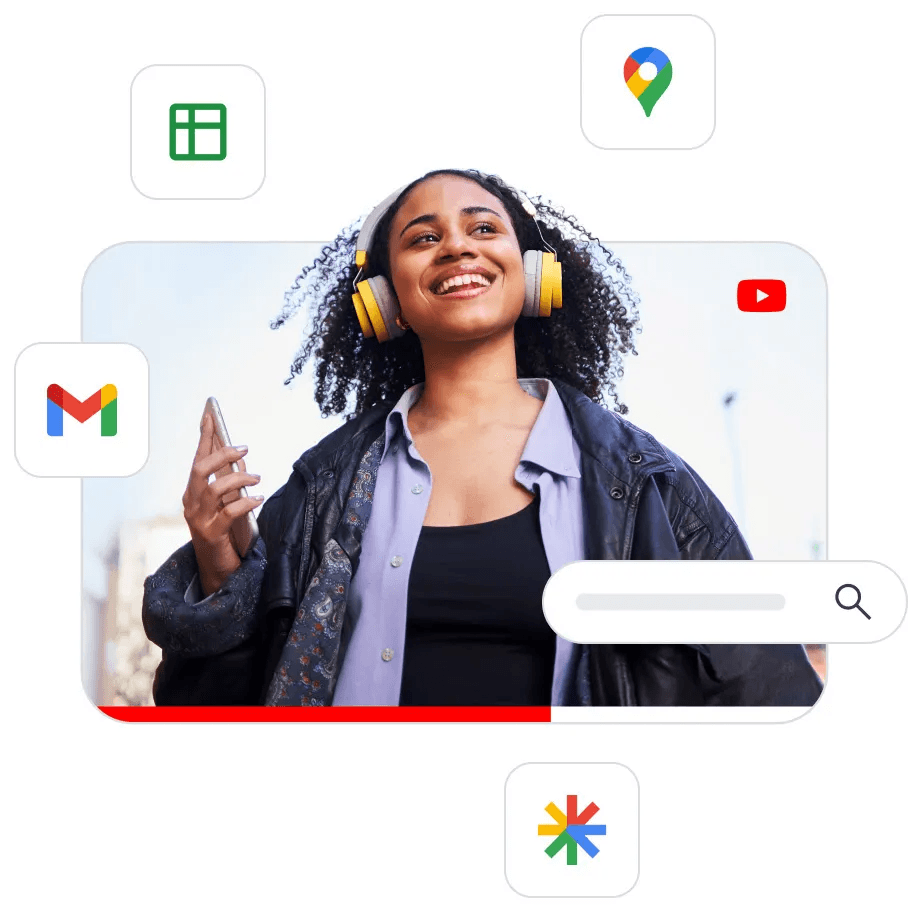
The essence of P-MAX is not merely the appearance of an automation tool. It signifies a fundamental paradigm shift that changes marketers' thinking from "optimization based on channels" to "optimization based on audience and business goals". Instead of managing search, display, and YouTube separately, P-MAX crosses all ad placements in Google within a single campaign and automatically provides optimal delivery based on conversion goals using AI.
The benefits of this strategic shift will be substantial.
Focus on Maximizing Conversions: According to Think with Google, advertisers who adopted P-MAX saw an average conversion increase of more than 18% at comparable CPAs (cost per acquisition). AI autonomously discovers the most efficient delivery targets across channels.
Dramatic Reduction in Operational Workload: By setting the campaign goals, budget, and creative materials (assets), AI then automatically optimizes. This allows marketers to be freed from meticulous adjustment tasks and focus on more strategic operations.
Creation of Business Growth Opportunities: AI autonomously discovers high-conversion segments that are unpredictable for humans, creating new opportunities for business growth.
Of course, there are strategic challenges such as "it is difficult to understand how much is being delivered to which placements (prone to becoming a black box)" and "it competes with existing search campaigns, sometimes cannibalizing results". However, the introduction of the "Channel Performance Report" on April 30, 2025 has improved transparency by visualizing results by channel, and this trend will continue to accelerate.

3. The 'Right Answer' in Creativity is Found by AI. The Role of Humans Shifts to Providing 'Hypotheses'
The wave of transformation by AI is affecting not only advertising operations but also the creative production domain, such as banners, ad copy, and videos. Generative AI has now established itself as a powerful "production partner" for marketers.
Text Ads: Using tools like ChatGPT or Copy.ai, you can generate dozens of patterns of ad copy for A/B testing just by specifying the target and appeal axis.
Banners and Video Ads: AI functions are being increasingly incorporated into advertising platforms. For example, the demand generation campaign on Google Ads has added the function of automatically creating high-quality videos from image and text assets. Yahoo! Ads has also implemented the "quick link asset suggestion function using generative AI" (usable up to 30 times per account per month), allowing for a variety of creatives to be prepared even without specialized knowledge.
The biggest impact of this change is the acceleration and diversification of A/B testing. Traditionally, the limit for creative tests was to try a few patterns; now, with AI, dozens of patterns can be executed simultaneously. This dramatically accelerates the PDCA cycle to improve results, enabling the quick identification of the most optimal creatives based on data.
Notably, the role of humans is no longer to create "correct" creatives from scratch. It is now shifting towards providing various materials and directions as "hypotheses" for AI, and evaluating and judging the "answers" that AI uncovers based on data. In fact, the AI ad copy generation tool developed by Dentsu, "AICO2", learns the thought processes of professional copywriters and generates high-quality copy comparable to that produced by humans. AI is a partner that expands creativity.
4. The New Role of Humans: Becoming 'Teachers' Who Nurture AI. The Quality of Content and Data Will Determine Success or Failure
As automation by AI progresses, our role as marketers is fundamentally changing from "operators" who perform detailed setting tasks to strategists who lead AI correctly and maximize its capabilities. What to "teach" AI, and the quality of that input will determine advertising results post-2025.
This role of "AI strategist" is a central strategy of the new era shared by both LLMO and P-MAX discussed in this article.
The Role of 'Teachers' in LLMO: To ensure AI correctly quotes and recommends your business, it is essential to provide high-quality content as "teaching materials." Structured content that meets the previously mentioned "factual accuracy," "detail level," "logical consistency," and "quality of evidence" becomes the best learning data for AI.
The Role of 'Teachers' in P-MAX: To accelerate AI learning in P-MAX and maximize targeting accuracy, providing high-quality "signals" and "assets" is a decisive factor.
High-Quality Signals (Data): Google officially states that "first-party data, such as customer match lists and website visitor lists, is recommended as the most valuable signals." The well-known television shopping channel Shop Channel linked its customer data to P-MAX, resulting in an astonishing achievement of a 45% increase in new customer acquisition and a 24% improvement in CPA.
High-Quality Assets (Materials): By providing high-quality and diverse texts, images, and videos to AI, it can automatically generate the optimal combination of ads. In fact, data shows that improving the effectiveness of ads (asset quality evaluations) to "good" or "best" resulted in a 6% average increase in conversions. Furthermore, reports indicate that by preparing various vertical, horizontal, and square video assets, conversions on YouTube increased by 20% on average, showing the direct connection between asset diversity and results.
In conclusion, "making the most of AI" does not mean delegating everything to AI. Providing high-quality content (for LLMO) and strategically offering high-quality data and assets (for P-MAX) to maximize AI performance is the most crucial skill required of marketers moving forward.
5. The Pitfalls of "Relying on AI": Strategic Preparedness for Brand Damage and Legal Risks
While generative AI is a powerful tool, its use also carries significant risks. Operating by fully entrusting everything to AI poses the danger of falling into unexpected pitfalls. Marketers must accurately understand these risks in addition to the merits and take countermeasures.
The main risks in AI advertising operations can be classified into the following three categories.
Out of Control Advertising Costs Due to Initial Setup Mistakes: Basic mistakes like forgetting to set budget limits or omitting exclusion keywords can be instantly amplified by AI's automated optimization, leading to the risk of wasting hundreds of thousands or millions of advertising costs overnight.
Brand Damage Risk: AI does not understand ethics or brand image. As a result, there is a possibility of incorrectly placing ads on inappropriate websites or automatically generating creatives that do not match brand image. For example, "AI-generated model images were biased toward specific races or genders," which could lead to backlash and criticism on social media.
Legal and Ethical Risks: The images and texts generated by generative AI may inadvertently infringe on third-party copyrights or portrait rights. There are also potential cases where culturally insensitive expressions or biased copies are generated, leading to public outrage.
To avoid these risks, the following countermeasures are essential.
Establishing a Collaborative System Between AI and Humans: It is important to practice the principle that "final decisions must always be made by humans." AI is merely an excellent assistant; the ultimate decisions involving brand strategy and compliance should be responsibly made by humans.
Establishing a Monitoring System: Regular checks of delivery placements, continuous updating of exclusion lists, and a prior approval process for creatives generated by AI are necessary to build a concrete monitoring flow into routine operations.
Creating Internal Guidelines: Clearly defining internal rules for safely utilizing generative AI and sharing them with all relevant parties is the first step in organizational risk management.
Summary and Next Steps
The five major transformations discussed in this article represent not individual trends, but a large structural change that is interconnected. The era of desperately optimizing by channel has come to an end. The key to success in web advertising in 2025 is simply one thing: "To become the most trustworthy 'answer' for both users and AI."
This is the unified new era marketing strategy achieved through the content you create (LLMO strategy) and the data you provide (P-MAX strategy). Humans must shift toward a more creative and strategic role as "teachers" nurturing AI.
Building a new collaborative relationship with AI without falling behind this wave of change is the survival strategy for marketers going forward.
The AI marketing optimization platform "Cascade" implements advanced levels of AI-driven advertising optimization and data analysis as discussed in this article. It manages the increasingly complex advertising operations centrally and proposes the next steps with AI. If you are interested, please take a look.
"The evolution of AI is so fast that I can no longer keep up"; "Methods of advertising that used to work are no longer producing results for some reason." Many of you may be feeling these anxieties and frustrations as web marketers. The rise of generative AI is not just a change in tools but is causing a structural upheaval in the world of web advertising. The key to reading the web advertising trends of 2025 and leading the competition lies in deeply understanding the essence of this change.
If you read this article to the end, you will gain a deep understanding of the irreversible changes that will occur in the web advertising market in 2025 and will be able to clearly outline specific next steps to take starting tomorrow.
This article will thoroughly explain the "five major turning points" currently happening in the world of web advertising from specific data and strategic perspectives.
The End of "Click Acquisition" and the Rise of the New Common Sense "LLMO"
Shift in Thinking: The Paradigm Shift from "Channels to Objectives" Brought by P-MAX
The 'Right Answer' in Creativity is Found by AI. The Role of Humans Shifts to Providing 'Hypotheses'
The New Role of Humans: Becoming 'Teachers' Who Nurture AI. The Quality of Content and Data Will Determine Success or Failure
The Pitfalls of "Relying on AI": Strategic Preparedness for Brand Damage and Legal Risks
1. The End of "Click Acquisition". What is the New Common Sense “LLMO” Coming After SEO?
The rules of the game that have been absolute common sense in web marketing, which is to "rank high in search results and acquire clicks," are about to be fundamentally overturned. Thanks to generative AI's search functions, represented by Google's AI Overview, users are rapidly moving toward a "zero-click search" where they can obtain information solely from AI-generated summaries without clicking links on search results pages.
The impact of this change is enormous. According to a survey by Bain & Company, "80% of consumers are completing over 40% of their searches solely using AI," revealing the reality that opportunities for access to websites are structurally being lost.
This zero-click search brings two serious impacts on corporate marketing activities.
Catastrophic Decline in Organic Traffic: A large-scale study by Ahrefs reports that for keywords where AI Overview is displayed, the click-through rate (CTR) for organic search rank 1 has dropped by about 34.5% on average. No matter how much investment is made in SEO measures, there is a situation where visitors to the site are drastically decreasing.
Loss of Brand Awareness Opportunities: If users do not visit the site, the opportunity to directly convey the quality of content and the appeal of the brand is lost.
A new strategy for this challenge is “LLMO (Large Language Model Optimization). LLMO is, in short, a strategy to become a brand favored by AI", which refers to efforts to optimize so that the company's products and services are quoted or recommended in the responses generated by AI.
To succeed in LLMO, it is essential to understand the criteria by which AI evaluates content. AI places particular importance on the following four elements.
Factual Accuracy: Is verifiable information clearly presented?
Detail Level: Are there sufficient examples and detailed explanations?
Logical Consistency: Are the claims logically connected to the reasons?
Quality of Evidence: Is there backing data, statistics, or research citations from reliable sources?
LLMO differs in coverage from traditional SEO. LLMO is an action to construct authority around the brand in the medium of AI, aiming to induce subsequent direct searches and purchases. The purposes and approaches of the two are fundamentally different, as shown below.
Item | SEO | LLMO |
Main Purpose | Increase rank in search results pages and increase traffic | Get included in AI responses, provoking later direct searches and purchase behavior |
Optimization Target | Search engine ranking algorithms | AI's language understanding and information evaluation processes |
Effect Manifestation | Immediate clicks after a search | Recognition by AI → Consideration and purchase later |
2. Shift in Thinking: The Paradigm Shift from "Channels to Objectives" Brought by P-MAX
In the world of advertising management, the era of humans meticulously adjusting bid prices for each keyword has come to an end, with automated optimization by AI becoming the standard. The embodiment of this is Google’s P-MAX (Performance Max) campaign.
The essence of P-MAX is not merely the appearance of an automation tool. It signifies a fundamental paradigm shift that changes marketers' thinking from "optimization based on channels" to "optimization based on audience and business goals". Instead of managing search, display, and YouTube separately, P-MAX crosses all ad placements in Google within a single campaign and automatically provides optimal delivery based on conversion goals using AI.
The benefits of this strategic shift will be substantial.
Focus on Maximizing Conversions: According to Think with Google, advertisers who adopted P-MAX saw an average conversion increase of more than 18% at comparable CPAs (cost per acquisition). AI autonomously discovers the most efficient delivery targets across channels.
Dramatic Reduction in Operational Workload: By setting the campaign goals, budget, and creative materials (assets), AI then automatically optimizes. This allows marketers to be freed from meticulous adjustment tasks and focus on more strategic operations.
Creation of Business Growth Opportunities: AI autonomously discovers high-conversion segments that are unpredictable for humans, creating new opportunities for business growth.
Of course, there are strategic challenges such as "it is difficult to understand how much is being delivered to which placements (prone to becoming a black box)" and "it competes with existing search campaigns, sometimes cannibalizing results". However, the introduction of the "Channel Performance Report" on April 30, 2025 has improved transparency by visualizing results by channel, and this trend will continue to accelerate.
3. The 'Right Answer' in Creativity is Found by AI. The Role of Humans Shifts to Providing 'Hypotheses'
The wave of transformation by AI is affecting not only advertising operations but also the creative production domain, such as banners, ad copy, and videos. Generative AI has now established itself as a powerful "production partner" for marketers.
Text Ads: Using tools like ChatGPT or Copy.ai, you can generate dozens of patterns of ad copy for A/B testing just by specifying the target and appeal axis.
Banners and Video Ads: AI functions are being increasingly incorporated into advertising platforms. For example, the demand generation campaign on Google Ads has added the function of automatically creating high-quality videos from image and text assets. Yahoo! Ads has also implemented the "quick link asset suggestion function using generative AI" (usable up to 30 times per account per month), allowing for a variety of creatives to be prepared even without specialized knowledge.
The biggest impact of this change is the acceleration and diversification of A/B testing. Traditionally, the limit for creative tests was to try a few patterns; now, with AI, dozens of patterns can be executed simultaneously. This dramatically accelerates the PDCA cycle to improve results, enabling the quick identification of the most optimal creatives based on data.
Notably, the role of humans is no longer to create "correct" creatives from scratch. It is now shifting towards providing various materials and directions as "hypotheses" for AI, and evaluating and judging the "answers" that AI uncovers based on data. In fact, the AI ad copy generation tool developed by Dentsu, "AICO2", learns the thought processes of professional copywriters and generates high-quality copy comparable to that produced by humans. AI is a partner that expands creativity.
4. The New Role of Humans: Becoming 'Teachers' Who Nurture AI. The Quality of Content and Data Will Determine Success or Failure
As automation by AI progresses, our role as marketers is fundamentally changing from "operators" who perform detailed setting tasks to strategists who lead AI correctly and maximize its capabilities. What to "teach" AI, and the quality of that input will determine advertising results post-2025.
This role of "AI strategist" is a central strategy of the new era shared by both LLMO and P-MAX discussed in this article.
The Role of 'Teachers' in LLMO: To ensure AI correctly quotes and recommends your business, it is essential to provide high-quality content as "teaching materials." Structured content that meets the previously mentioned "factual accuracy," "detail level," "logical consistency," and "quality of evidence" becomes the best learning data for AI.
The Role of 'Teachers' in P-MAX: To accelerate AI learning in P-MAX and maximize targeting accuracy, providing high-quality "signals" and "assets" is a decisive factor.
High-Quality Signals (Data): Google officially states that "first-party data, such as customer match lists and website visitor lists, is recommended as the most valuable signals." The well-known television shopping channel Shop Channel linked its customer data to P-MAX, resulting in an astonishing achievement of a 45% increase in new customer acquisition and a 24% improvement in CPA.
High-Quality Assets (Materials): By providing high-quality and diverse texts, images, and videos to AI, it can automatically generate the optimal combination of ads. In fact, data shows that improving the effectiveness of ads (asset quality evaluations) to "good" or "best" resulted in a 6% average increase in conversions. Furthermore, reports indicate that by preparing various vertical, horizontal, and square video assets, conversions on YouTube increased by 20% on average, showing the direct connection between asset diversity and results.
In conclusion, "making the most of AI" does not mean delegating everything to AI. Providing high-quality content (for LLMO) and strategically offering high-quality data and assets (for P-MAX) to maximize AI performance is the most crucial skill required of marketers moving forward.
5. The Pitfalls of "Relying on AI": Strategic Preparedness for Brand Damage and Legal Risks
While generative AI is a powerful tool, its use also carries significant risks. Operating by fully entrusting everything to AI poses the danger of falling into unexpected pitfalls. Marketers must accurately understand these risks in addition to the merits and take countermeasures.
The main risks in AI advertising operations can be classified into the following three categories.
Out of Control Advertising Costs Due to Initial Setup Mistakes: Basic mistakes like forgetting to set budget limits or omitting exclusion keywords can be instantly amplified by AI's automated optimization, leading to the risk of wasting hundreds of thousands or millions of advertising costs overnight.
Brand Damage Risk: AI does not understand ethics or brand image. As a result, there is a possibility of incorrectly placing ads on inappropriate websites or automatically generating creatives that do not match brand image. For example, "AI-generated model images were biased toward specific races or genders," which could lead to backlash and criticism on social media.
Legal and Ethical Risks: The images and texts generated by generative AI may inadvertently infringe on third-party copyrights or portrait rights. There are also potential cases where culturally insensitive expressions or biased copies are generated, leading to public outrage.
To avoid these risks, the following countermeasures are essential.
Establishing a Collaborative System Between AI and Humans: It is important to practice the principle that "final decisions must always be made by humans." AI is merely an excellent assistant; the ultimate decisions involving brand strategy and compliance should be responsibly made by humans.
Establishing a Monitoring System: Regular checks of delivery placements, continuous updating of exclusion lists, and a prior approval process for creatives generated by AI are necessary to build a concrete monitoring flow into routine operations.
Creating Internal Guidelines: Clearly defining internal rules for safely utilizing generative AI and sharing them with all relevant parties is the first step in organizational risk management.
Summary and Next Steps
The five major transformations discussed in this article represent not individual trends, but a large structural change that is interconnected. The era of desperately optimizing by channel has come to an end. The key to success in web advertising in 2025 is simply one thing: "To become the most trustworthy 'answer' for both users and AI."
This is the unified new era marketing strategy achieved through the content you create (LLMO strategy) and the data you provide (P-MAX strategy). Humans must shift toward a more creative and strategic role as "teachers" nurturing AI.
Building a new collaborative relationship with AI without falling behind this wave of change is the survival strategy for marketers going forward.
The AI marketing optimization platform "Cascade" implements advanced levels of AI-driven advertising optimization and data analysis as discussed in this article. It manages the increasingly complex advertising operations centrally and proposes the next steps with AI. If you are interested, please take a look.
\FreeDownload Now/
\FreeDownload Now/
\FreeDownload Now/
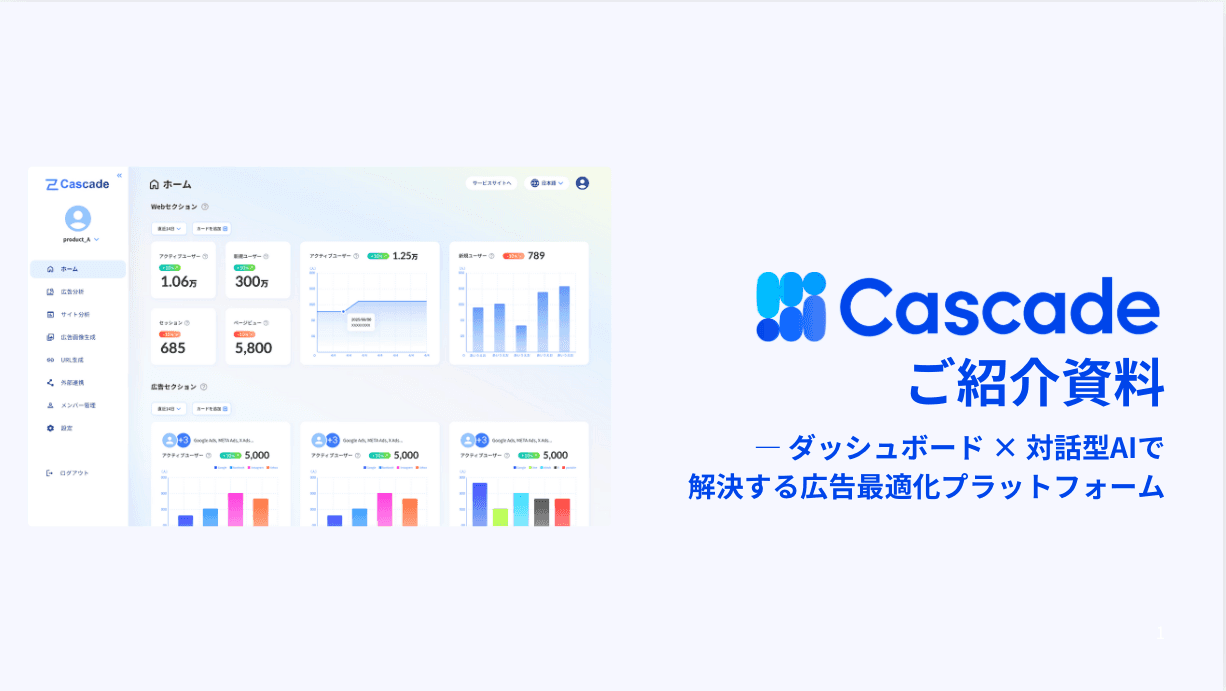
Table of Contents
© 2025 Cascade Inc, All Rights Reserved.

© 2025 Cascade Inc, All Rights Reserved.
© 2025 Cascade Inc, All Rights Reserved.